
If you want to know how to design a home office that balances functionality and style, prioritizing structural ergonomics and natural lighting is the absolute best place to start.
Working from home has become a cornerstone of modern professional life, making a dedicated and well-designed home office no longer a luxury, but a necessity. This guide will walk you through the process of creating a functional, comfortable, and stylish workspace that boosts your productivity and enhances your workday.
This article contains affiliate links. As an Amazon Associate, I earn from qualifying purchases at no extra cost to you.
Understanding Home Offices
The Importance of a Functional Home Office
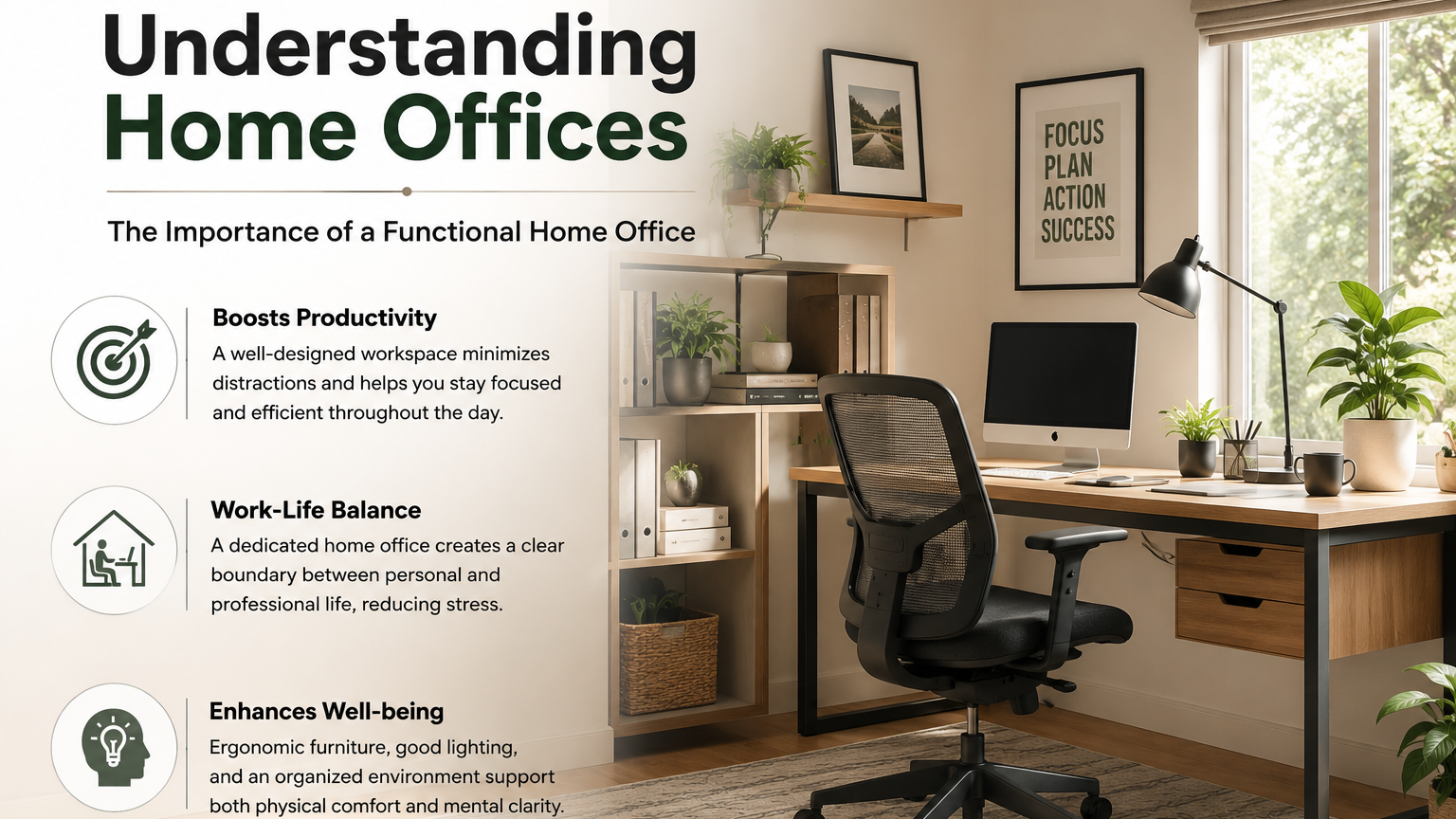
A functional home office is crucial for anyone engaging in work-from-home arrangements, as it delineates a clear boundary between personal and professional life. Properly designing your home office helps to minimize distractions and establish a dedicated work environment, which in turn can significantly boost productivity. It’s not just about having a desk and a chair; it’s about creating the perfect home office space tailored to your specific needs and workflow. Without a purposeful setup, it’s easy for work to bleed into personal time, diminishing overall well-being.
Creating a Productive Work Environment
Creating a productive work environment hinges on thoughtful home office design and the strategic placement of essential office furniture. An ergonomic office chair and an adjustable standing desk are fundamental for maintaining good posture and preventing eye strain during long workdays. Good lighting, including natural light and effective task lighting like a desk lamp, is paramount to boosting productivity and creativity. By addressing clutter with clever storage solutions, such as shelves and drawers, you can maintain an organized home office area that supports focus and efficiency.
Home Office Ideas for Every Space
Whether you have an entire room or just a compact home office nook, there are countless ways to create a productive workspace. For smaller spaces, consider incorporating a home office into an unused corner or a spacious cabinet, transforming it into a hidden workspace. Interior design principles can help you maximize even the most challenging areas, making them functional and stylish. The key is to optimize the available space with smart design elements, ensuring that every inch contributes to a comfortable and efficient work environment.
Why Design Matters — Concrete Facts & Statistics
Well-designed home offices improve productivity and reduce turnover. A 2015 randomized study of call-center employees found a 13% productivity gain for remote workers — showing clear productivity benefits when the work environment supports focused work (source: Stanford/Nicholas Bloom).
Daylight and views matter: a multi-year analysis by Heschong Mahone Group linked access to natural light with up to 23% higher performance on certain tasks and fewer reported eyestrain complaints. Plenty of natural light correlates with better mood, lower eye strain, and higher productivity and creativity. Heschong Mahone Group
Ergonomics reduces discomfort: workplaces that implement ergonomic chairs and adjustable desks report substantially lower musculoskeletal complaints and improved posture. Adjustable desks and office chairs reduce reported back pain in many workers; standing-desk trials show reduced sedentary time and improved perceived alertness (source: Occupational Medicine reviews).
Six Principles on How to Design a Home Office Successfully
Applying the right design principles from the start saves time, money, and frustration. The following core principles distill best practices from ergonomics research, interior design, and productivity science into actionable guidelines you can apply to any home office setup.
- Define the workspace: carve a dedicated home office space or nook — even a compact setup can function like a proper office if it’s curated and separated from living areas.
- Maximize natural light: place your home office desk near a window to reduce glare when possible and use translucent curtains to control intensity.
- Layer lighting: combine natural light, task lighting (desk lamp or adjustable task light), and ambient lighting to avoid eye strain and glare.
- Ergonomic setup: invest in an office chair that supports good posture, set monitor height to eye level, and consider a standing desk or adjustable sit-stand converter to vary posture during the workday.
- Declutter and store: use shelving, filing cabinets, drawers, and cabinets to keep office supplies out of sight — a tidy, clutter-free workspace reduces distraction and visual clutter.
- Functional decor: curate decor and natural materials that inspire without creating distraction; add a rug or plants to soften the space and improve acoustics.
- Design for tasks: arrange desk space and storage by frequency of use — daily office supplies within arm’s reach, less-used items in a drawer or on a shelf.
Step-by-Step: Set Up Your Home Office (Practical Checklist)
Use this step-by-step checklist to build your home office from scratch or refine an existing setup. Each step builds on the last, so work through them in order for the most efficient result.
- Choose the spot: identify a nook or room that gives at least 1.2–1.5 m of desk space (small desks are fine for compact setups).
- Desk & chair: pick a home office desk sized to your tasks and a supportive office chair. If you’ll stand, get a standing desk with 120–125 cm width or a converter for existing desks.
- Lighting: place the desk near a window for natural light; add an adjustable desk lamp with task lighting of 500–1000 lux at the task plane to reduce eye strain.
- Monitor & posture: top of monitor at eye level, 50–70 cm from eyes. Use a laptop dock with an external keyboard if needed.
- Storage solutions: include filing cabinets, shelves, and drawers — label and curate office supplies to maintain a clutter-free environment. For desk-level organization, these stationery finds to boost productivity and privacy are worth a look.
- Acoustics & privacy: use rugs, curtains, and bookcases to absorb sound; position the desk away from high-traffic areas to reduce distraction.
- Personalize with purpose: add inspiration (art, color accents, plants) to boost productivity and creativity without creating visual clutter.
Design Elements and Furniture — Functionality and Style
Office furniture should be both stylish and functional. Choose modular storage, closed cabinets for paperwork, open shelves for reference books, and a drawer unit for small office supplies. Incorporate natural materials and vibrant colors strategically to stimulate creativity while keeping the space professional.
Recommended pieces: ergonomic office chair, adjustable standing desk, desk lamp with dimming, under-desk cable management, filing cabinets or vertical storage, area rug for warmth and acoustics, curtains for glare control, and a small shelf or cubby for daily items.
Lighting & Visual Comfort
Good lighting lowers eye strain and increases alertness. Combine natural light with layered artificial light: overhead ambient + task lighting (adjustable desk lamp) + accent. Control glare with curtains or blinds and by angling screens relative to windows. For task lighting, aim for 300–500 lux at the desktop for general tasks and 500–1000 lux for detailed work.
Ergonomics & Health
Maintain a neutral wrist position, feet flat on the floor or on a footrest, monitor top at eye level, and change posture every 30–60 minutes. Standing desks reduce sedentary time; trials show improved well-being and reduced back pain for many users. Prioritize an office chair with lumbar support, adjustable height, and tilt — if back pain is already a concern, The Best Home Office Chair for Back Pain in 2026 covers the top-rated picks across price ranges.
Storage, Decluttering, and Maintaining a Tidy Workspace
Adopt a simple storage taxonomy: daily items in desk drawers, active files in a nearby filing cabinet or shelf, archives in closed cabinets. Remove visual clutter by curating decor and using matching storage bins. A weekly 15-minute tidy ritual keeps office spaces functional and clutter-free. For ready-to-buy picks, these Amazon home organization products that save space offer practical, affordable solutions worth bookmarking.
Design Solutions for Small Spaces and Shared Homes
For compact homes, consider a floating desk, space-saving floating shelves, under-desk drawer units, and room dividers. Use vertical space with shelves and pegboards; create an office feel with a consistent color palette and a dedicated rug to visually separate the work area from the rest of the room. If you’re working with a truly limited footprint, 3 Smart Furniture Finds to Double Your Space covers compact options that punch well above their size.
Designing for Productivity and Creativity
Balance stimulation and calm: vibrant colors or an accent wall can spark creativity, while neutral tones and natural materials support focus. Curate objects that inspire work-related goals and remove items that cause distraction. A clear boundary between work and leisure areas in your home reduces role blurring and enhances both productivity and inspiration.
Checklist — Creating the Perfect Home Office
Before finalizing your home office setup, use this checklist to confirm every key element is in place. Check off each item to ensure your workspace is ergonomic, well-lit, organized, and ready to support focused, productive work.
- Home office area defined (nook, room, or corner)
- Desk and chair ergonomic setup verified
- Plenty of natural light; window nearby
- Layered lighting: ambient + task lighting (desk lamp)
- Adjustable furniture (standing desk or adjustable monitor)
- Storage: shelves, filing cabinets, drawers, cabinet
- Clutter-free desktop and curated decor
- Rug and curtains for comfort and glare control
- Office supplies organized and labeled
- Weekly tidy routine established to minimize visual clutter and distraction
Resources & Source Traceability
The recommendations in this guide are grounded in peer-reviewed research and industry standards. The following sources were used to substantiate key claims — consult them directly for full methodology, data, and context.
- Stanford WFH randomized study (productivity +13%)
- Daylighting and productivity (Heschong Mahone Group)
- Ergonomics and standing desks — Occupational Medicine literature reviews: search reviews on standing desks and musculoskeletal outcomes for trials and meta-analyses.
- Practical lighting guidance: Illuminating Engineering Society (IES) recommendations for task lighting and lux levels.
For design inspiration and tailored layout ideas, consider consulting an interior designer or using room-planning tools to map your home office layout and ensure your decisions align with the size and function of the space.
Designing Your Home Office Space
Choosing the Right Office Furniture
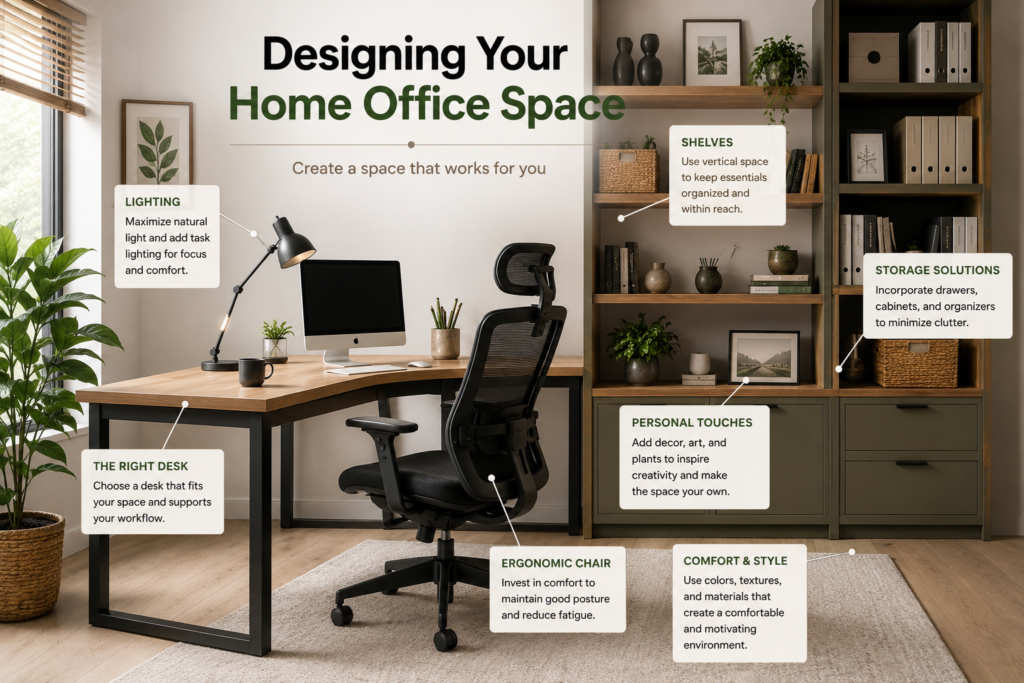
Choosing the right office furniture is a critical step in designing your home office, directly impacting your comfort and productivity. Thoughtful design considers not just aesthetics but also functionality, ensuring each piece contributes to a streamlined work environment. Prioritize pieces that align with your workflow and the overall interior design of your home for a cohesive, inspiring workspace.
Essential Office Chair and Desk Selection
An ergonomic office chair paired with the right desk forms the backbone of any productive home office. An adjustable standing desk can significantly improve posture and reduce eye strain, contributing to overall well-being during long workdays. These two pieces of furniture deliver the highest impact per dollar, so test options before committing and prioritize adjustability above all. For a detailed breakdown of the best options for back support, see The Best Home Office Chair for Back Pain in 2026.
Incorporating Shelves and Storage Solutions
To maintain an organized, distraction-free work environment, adequate storage is essential. Clever use of drawers, cabinets, or open shelves helps manage clutter, keeping your workspace tidy and functional. These design elements not only provide practical storage but also contribute to the aesthetic appeal of your home office, fostering a more productive and stylish setting.
Decorating Your Home Office
Selecting Colors and Materials
The colors and materials you choose for your home office can profoundly influence mood and output. Light, calming tones create a serene work environment, while vibrant accents boost creativity and inspiration. Choose durable, easy-to-maintain materials for your desk and other surfaces — practical choices that look good and hold up to daily use.
Lighting Techniques to Improve Productivity
Effective lighting is one of the most powerful levers you have for reducing eye strain and maintaining alertness. Position your desk near a window to maximize natural light, then add a quality desk lamp to illuminate your immediate work surface. Layering light sources — ambient overhead, directional task, and natural — eliminates harsh shadows and keeps you comfortable throughout the workday.
Adding Rugs and Personal Touches
A well-chosen rug defines the home office area, adds warmth, and absorbs sound — reducing both distractions and visual clutter. Incorporating personal items such as artwork or plants infuses personality and boosts creativity, making your home office a place you genuinely enjoy. Keep personal touches intentional so they energize rather than distract.
Maximizing Productivity in Your Home Office
Strategies to Minimize Distractions
A well-thought-out home office design significantly reduces common interruptions. Position your desk away from high-traffic areas and windows with busy views, and consider noise-canceling headphones to create a more focused work environment. Reducing visual clutter — through organized storage and curated decor — eliminates the background mental load that interrupts concentration throughout the workday. Pairing good design with the right tools makes a real difference: these smart home office gadgets to skyrocket your focus are worth considering if you want tech-assisted productivity.
Organizing Your Workspace to Reduce Clutter
An organized workspace directly supports concentration and efficiency. Implement shelves, drawers, and cabinets to keep your desk clear, making it easier to find necessary items and maintain a streamlined workflow. When everything has a designated place, starting and ending your workday becomes faster and less stressful — a small organizational investment that compounds over time.
Setting Up Your Home Office for Maximum Productivity
Sustained productivity requires both ergonomic comfort and a thoughtful environment. Ensure your chair and desk promote good posture and prevent the discomfort that derails focus, and layer your lighting to maintain alertness throughout the day. By arranging furniture intentionally and minimizing clutter, you create conditions where deep, focused work is the default rather than the exception.
Final Thoughts on Home Office Design
Curating a Work-from-Home Nook
Even a small, dedicated corner can serve as a powerful psychological anchor for professional focus when it’s thoughtfully designed. Carefully selecting furniture and personalizing the decor transforms the space from a functional corner into an inviting workspace that signals “work mode” the moment you sit down. If you’re working within a small apartment, smart home upgrades that actually make daily life easier can help bridge the gap between living space and dedicated workspace.
Adapting Your Home Office for Changing Needs
The best home office designs anticipate change. Investing in adjustable furniture — a standing desk, modular shelving, or a versatile desk lamp — gives you the flexibility to reconfigure your workspace as your role, tools, or household evolves. This foresight means your home office continues to serve you well for years without requiring a costly redesign.
Long-term Benefits of a Well-Designed Workspace
The returns on a well-designed home office extend well beyond productivity metrics. An ergonomic, well-lit, and clutter-free environment reduces daily physical strain, lowers stress, and supports the kind of sustained focus that compounds into meaningful career growth over time. Treating your home office as a serious investment in your professional and physical well-being creates a workspace that serves you for the long term. For related design inspiration across your home, How to Design a Small Living Room That Feels Spacious, Stylish & Functional applies many of the same principles to another high-use space.