
When Your Entryway Feels Like a Storage Problem: 5 Smart Fixes
Want to transform your small entryway without drilling holes or making permanent changes? These 5 renter-friendly entryway ideas will help you maximize storage, reduce clutter, and create a stylish first impression—all while keeping your security deposit safe.
Living in a small apartment in cities like New York, Berlin, London, or Amsterdam comes with one universal challenge—creating a chic first impression.there is rarely a proper entryway. Shoes pile up near the door, jackets end up on chairs, and keys somehow disappear right when you need them most, affecting your stylish decor.
As a civil engineer working in Germany, I’ve experienced this firsthand. Many European apartments—and even compact urban homes in the US—are designed with efficiency in mind, not storage. In several layouts I’ve worked with and personally lived in (ranging from 35–60 sqm apartments), I noticed that even the smallest spaces can benefit from thoughtful design — the same logic behind our small apartment living room layout guide. 1 square meter near the entrance can be transformed into a highly functional storage zone when designed correctly.
This guide is not just based on generic design ideas—it combines real-life usage, engineering principles, and practical renter-friendly solutions that work in both US and European apartments.
Disclaimer: This design is intended to enhance the first impression of your home and create a welcoming atmosphere.
Smart Deal Finds may earn a small commission at no extra cost to you, helping you find the best home decor
Why Entryway Design Matters More Than You Think
In small apartments, every space must serve a purpose to create a functional entryway. The entryway is not just a transition zone—it’s a high-frequency functional area used multiple times a day.
When poorly designed, it leads to a cluttered space that detracts from your first impression.
- Daily clutter accumulation
- Inefficient movement (especially during busy mornings)
- Visual chaos that makes your entire home feel smaller
From a layout efficiency perspective, the entryway should:
- Interior designers and accessibility guidelines generally recommend maintaining at least 80–90 cm (31–35 inches) of clear walking space in residential hallways to improve comfort and reduce congestion. Recommendations are consistent with guidance from the International Residential Code (IRC) and ADA Standards for Accessible Design (although ADA dimensions apply primarily to accessible public spaces)
- Provide quick access to daily essentials
- Use vertical and hidden storage instead of floor-heavy furniture
👉 The key principle: Optimize flow first, then add storage—not the other way around.
5 Practical Small Apartment Entryway Ideas (With Real-World Layout Guidance)
Every apartment entryway is different, but the best solutions share one goal: maximize storage without making the space feel cramped. The five small entryway ideas below are practical, renter-friendly, and designed to improve organization, walking clearance, and everyday convenience in narrow hallways and compact apartments.
The Vertical Wall Hook System
Wall hooks utilize unused vertical space, which is often overlooked in small apartments — the same underused-space thinking behind Smart Home Upgrades for Small Apartments That Actually Make Daily Life Easier. Unlike cabinets or racks, they add zero floor footprint, making them ideal for narrow hallways.
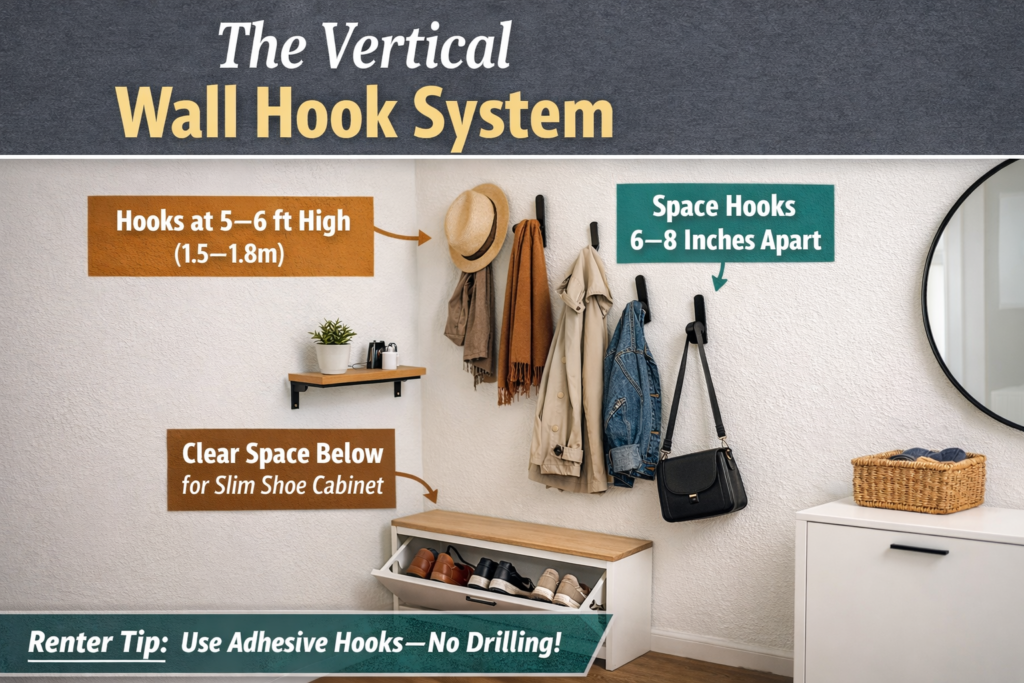
Wall hooks are one of the simplest yet most effective storage solutions for renters looking to decorate a small entryway.
Why This Works
Wall hooks utilize unused vertical space, which is often overlooked in small apartments. Unlike cabinets or racks, they add zero floor footprint, making them ideal for narrow hallways.
Best Use Cases
- Jackets and coats can be neatly stashed in a stylish space to keep the entryway organized.
- Bags and backpacks
- Scarves, hats, and daily essentials
Cost Range for ways to style your entryway can vary greatly.
- Typical retail price (July 2026): $15–40 based on listings from Amazon, IKEA, and Home Depot.
Engineering Insight
In many European apartments, hallway widths range between tiny entryway dimensions that can still be stylish. 90–120 cm stylish fixture can elevate your entryway and create a welcoming atmosphere.. Adding floor-based furniture reduces usable width significantly, impacting your decorating ideas. Wall hooks maintain full clearance while improving accessibility, making them a great choice for any interior design project.
When NOT to Use
- If wall strength is weak (use adhesive hooks instead)
- If you tend to overload items (can look cluttered quickly)
Slim Shoe Cabinets for Narrow Hallways can accommodate footwear while keeping the area tidy and stylish.
Shoes are often the biggest entryway challenge.
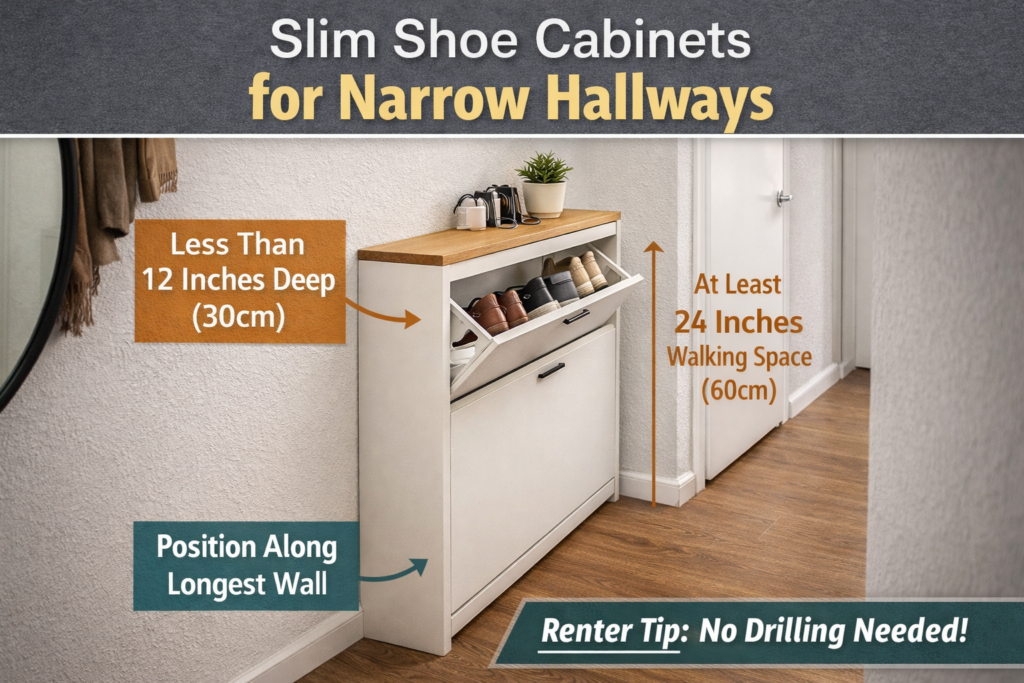
Traditional shoe racks are inefficient for small spaces. Slim shoe cabinets are specifically designed for compact layouts.
Why This Works
- Vertical stacking increases storage capacity
- Closed design keeps the space visually clean
- Fits into narrow areas (depth < 25 cm / 10 inches)
Cost Range
- USA: $50–$120
- Europe: €45–€100
Real-Life Experience
In my apartment in Germany, switching from an open rack to a slim cabinet immediately made the entryway feel less cluttered and more structured, even though storage capacity increased, it may compromise the entryway look and first impression of your home.
Common Mistake to Avoid
Avoid cabinets deeper than 30 cm (12 inches) can be accented with entryway wallpaper for a stylish touch.—they disrupt walking flow and create bottlenecks near the entrance.ance.
Floating Shelves: Lightweight, Flexible, and Renter-Friendly
What if you don’t technically have an entryway? An interior designer might suggest creating a gallery wall to define the space.
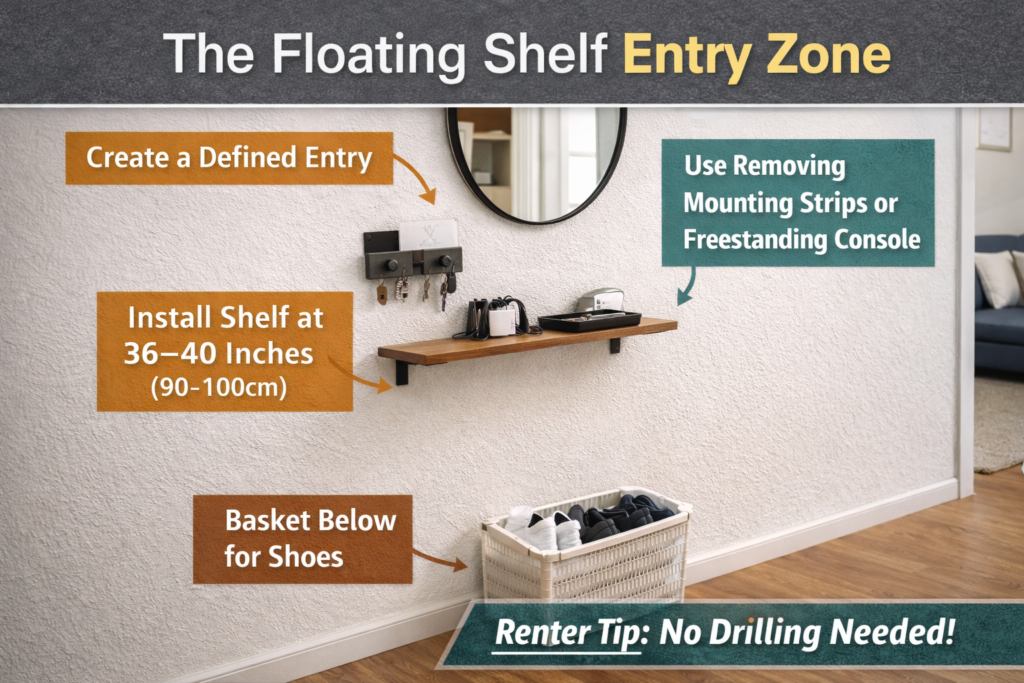
Floating shelves are perfect for storing small daily essentials without taking up floor space — see the full sizing and placement breakdown in 4 Space-Saving Floating Shelves That Make Small Homes Look Amazing.
Why This Works
- Keeps frequently used items accessible, especially when paired with a lamp or vase for added functionality.
- Maintains clean, minimal look
- Easy to install and remove
Ideal For
- Keys, wallets, and sunglasses can be organized neatly with a key rack to reduce clutter.
- Mail and small accessories can be neatly organized in a drawer to avoid clutter.
Cost Range
- USA: $15–$40
- Europe: €12–€35
Placement Tip: Use stylish fixtures to enhance your home decor.
Install shelves at 140–160 cm height can be ideal for fixtures that enhance natural light in your stylish space. for optimal accessibility without blocking wall space.ace.
Entryway Bench with Hidden Storage
If your entry measures 4–5 ft wide (1.2–1.5 m), you may have room for a narrow storage bench — the same double-duty furniture logic covered in 3 Smart Furniture Finds to Double Your Space.
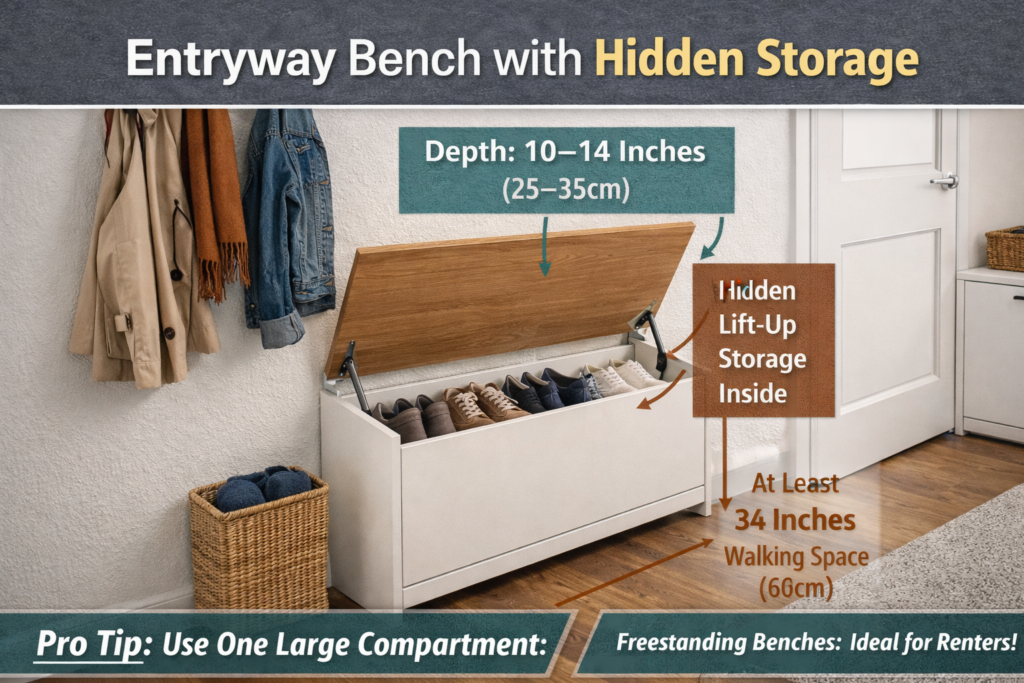
A bench around 10–14 inches (25–35 cm) deep provides a comfortable place to sit and adds texture to your entryway decor.
- A comfortable place to sit can also serve as a stylish fixture in your home decor, enhancing the overall entryway look.
- Concealed shoe storage
- Visual grounding for the space can be enhanced with stylish home decor, such as a key rack or vibrant potted plants.
Always maintain at least 30 inches (76 cm) of walkway clearance.
Lift-up storage benches typically look cleaner than open cubbies and hide irregular items like boots, contributing to a neutral aesthetic.
When shopping online, consider narrow entryway benches with lift-up storage or slim ottomans designed for tight spaces.
Because they’re freestanding, they’re usually safe for rentals and can complement any neutral interior design theme.
Over-the-Door Storage Strategy
If walls and floors are limited, look at the back of your door.
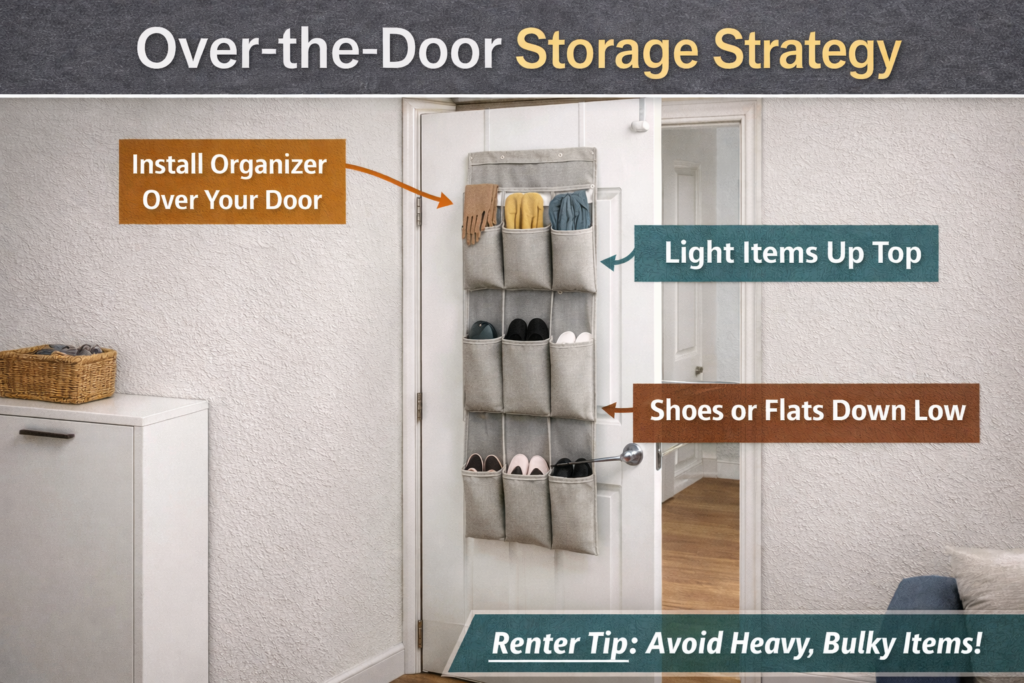
This is one of the most underrated solutions—especially useful in rental apartments.
Why This Works
- Uses unused door space
- Requires no drilling
- Adds significant hidden storage capacity
Best For
- Shoes
- Cleaning supplies
- Accessories
Cost Range
- USA: $12–$30
- Europe: €10–€25
Real-Life Insight
Many renters overlook door space completely. In many small apartments, over-the-door organizers provide significant additional storage by making use of otherwise unused vertical space..
Entryway Mistakes That Make Small Spaces Feel Smaller
Even well-intentioned purchases can cramp your space and lead to problems.
Avoid:
- Oversized benches deeper than 16 inches (40 cm)
- Blocking door swing clearance
- Overusing small mismatched baskets can detract from the stylish space you want to achieve in your foyer.
- Ignoring vertical space opportunities
- Choosing dark, bulky furniture in narrow, low-light areas can create an awkward space in your entryway.
Measure carefully before purchasing. Online dimensions can be misleading, especially when design experts recommend considering the space’s unique characteristics.g.
Budget-Friendly Upgrades That Make a Big Difference
Improving your entryway doesn’t require a full redesign.
Small changes can dramatically improve daily experience.
Peel-and-stick wallpaper can create a subtle focal wall without permanent changes.
Motion-sensor LED lights under shelves improve nighttime visibility in a foyer without wiring.
Stackable clear shoe boxes help organize seasonal footwear vertically while keeping it visible, contributing to a tidy entryway look.
Wall-mounted key holders add structure to daily routines.
These small improvements are affordable, renter-safe, and widely available online, making them great decorating ideas for any apartment.
What to Look for When Buying Entryway Furniture for Small Apartments
Before adding anything to your cart, check these essentials:
- Depth under 12 inches (30 cm) is ideal for narrow floating shelves that can hold decorative items like a vase or small lamp. for narrow hallways
- Taller pieces instead of wide ones
- Open-leg designs that allow visible floor space
- Multi-functional pieces (bench + storage, mirror + shelf)
- Lightweight but stable materials
Reading dimensions carefully prevents costly returns and layout frustration, ensuring your entryway sets the tone perfectly.
When choosing products, prioritize functionality over decorative trends. Small apartments reward practical design.l design.
Frequently Asked Questions About Small Apartment Entryways
Choosing the right entryway solution depends on your apartment layout, available wall space, and storage needs. These frequently asked questions answer the most common concerns about organizing a small entryway, selecting slim furniture, and creating a functional, clutter-free entrance.
1. How do I create storage in an apartment with no entryway?
If your front door opens directly into the living room, the key is to visually define a mini-zone with chic decor.
You can do this by incorporating elements that make a small space feel larger.
- Installing a narrow floating shelf (6–8 inches / 15–20 cm deep) can serve as a perfect spot for a small lamp or decorative vase.
- Adding wall hooks above it
- Placing a small shoe basket below
- Hanging a mirror to frame the area
Even a 2 ft (60 cm) wall section is enough to create structure. The goal is psychological separation — making the space feel intentional rather than improvised.m) wall section is enough to create structure. The goal is psychological separation — making the space feel intentional rather than improvised.
2. What is the ideal depth for entryway furniture in a narrow hallway?
For most small apartments, especially those with 3–4 ft (0.9–1.2 m) hallways, furniture depth should stay:
- Under 12 inches (30 cm) for shoe cabinets
- Around 10–14 inches (25–35 cm) for benches
Maintaining at least 24 inches (60 cm) of walking clearance is important for comfort and safety.
When shopping online, always check depth measurements carefully — product photos can be misleading.leading.
3. Are wall-mounted shelves renter-friendly?
They can be — depending on installation method, which can either enhance or clutter your tiny entryway.
Many renters use stylish home decor ideas to maximize their space.
- Removable mounting strips
- Damage-free adhesive brackets
- Tension-based systems can be a chic solution for maximizing space in a functional entryway.
- Freestanding alternatives
Before installing anything permanent, check your lease agreement. If drilling is restricted, opt for freestanding slim console tables instead of wall-mounted units.
4. How can I organize shoes in a small hallway without it looking cluttered?
Closed storage is usually more visually calming than open racks, helping to create a welcoming entryway look.
Consider: how an interior designer might utilize wall hooks and sconces to maximize both style and functionality.
- Slim tilt-out cabinets
- Stackable clear shoe boxes stored vertically can help maximize storage in smaller spaces while keeping things organized.
- Lift-up storage benches
- Under-console baskets
Limiting visible shoes to daily-use pairs helps maintain a clean look.
Seasonal shoes can be rotated to closet storage to avoid overcrowding.
5. What is the best entryway setup for a studio apartment?
In a studio, simplicity works best, but adding a pop of color can make it feel more lively.
A balanced layout often includes:
- Vertical wall hooks can be enhanced with decorative sconces to add style.
- One slim shoe cabinet under 12 inches (30 cm) deep
- A mirror to reflect light
Avoid overcrowding the area with multiple small pieces. Fewer, well-proportioned elements create a stronger impact.
6. How do I make a small entryway feel brighter and larger?
Light and reflection matter more than square footage when it comes to making your small entryway feel inviting.
To visually expand a tight hallway, consider using mirrors and potted plants for a bolder look.
- Use mirrors strategically
- Choose light-colored furniture
- Add motion-sensor LED lighting to enhance visibility and highlight your gallery wall.
- Keep the floor visible (open-leg furniture helps) to make it feel more spacious and inviting.
Even small lighting upgrades can make a narrow entry feel more open.
Engineer’s Layout Tip (High-Value Insight)
From a functional design perspective, always prioritize Movement flow over storage density is crucial for creating a welcoming entryway that feels spacious..
A slightly less “optimized” space with better movement will always perform better in daily use than an overcrowded entryway.
👉 Think of your entryway as a transition corridor, not a storage room.
Related Small Apartment Guides You May Also Like
Continue organizing your home with these practical guides on maximizing storage, improving room layouts, and choosing space-saving furniture for small apartments.
Small Apartment Living Room Layout Ideas That Maximize Space
If your front door opens directly into your living area, creating flow between the entryway and seating zone becomes essential. This guide shows how to position sofas, storage units, and multifunctional furniture without crowding the room.
👉 Read: Small Apartment Living Room Layout Ideas That Maximize Space
Smart Home Upgrades for Small Apartments That Actually Make Daily Life Easier
Want motion-sensor lighting, compact storage tech, or renter-friendly smart upgrades? This article focuses on practical solutions that improve everyday functionality without permanent installation.
👉 Read: Smart Home Upgrades for Small Apartments That Actually Make Daily Life Easier
👉 Read: 5 Best Amazon Home Organization Products That Save Space
Final Thoughts
Small entryways don’t require more furniture, but they can benefit from ways to style the space effectively.
They require better planning.
When you think vertically, choose slim dimensions, and focus only on daily-use essentials, your apartment immediately feels more organized and calmer.
And the best part? You can incorporate a chandelier for added elegance in your space. Most of these improvements are renter-safe and budget-conscious, making them ideal for smaller spaces.
Small entryways don’t need more space — they need smarter decisions, like incorporating coat racks to maximize functionality.