
Knowing how to build a zero-waste kitchen on a budget is one of the most rewarding ways to cut down your household expenses while living more sustainably. Learning how to build a zero-waste kitchen on a budget allows you to reuse glass jars, label dates, and track every item you discard for 7 days. In fact, households that combine container reuse with waste tracking cut grocery spending by 30–40% (2021 WRAP household study), making simple swaps for sustainable living. This ultimate guide shows you exactly how to reduce waste step by step, using low-cost tools with measurable payback for your sustainable living efforts
How Can I Create a Zero-Waste Kitchen?
Creating a zero-waste kitchen doesn’t require expensive products or a perfect pantry. The fastest way to start is with three free habits: track every item you throw away for one week, create a visible “use first” zone in your refrigerator, and freeze food before it spoils instead of after. According to a 2021 WRAP household study, combining waste tracking with container reuse can reduce grocery spending by 30–40%.
Once those habits are in place, make targeted swaps — replace paper towels with reusable dishcloths, zip bags with silicone bags, and single-use containers with glass. Add a small countertop compost bin to divert food scraps from landfill. The full starter kit costs around $57 and typically saves $140–$160 in the first year. The steps below walk through exactly how to do each of these, in the right order.
The Real Problem With Most Zero-Waste Advice and Key Principles of Zero-Waste Living
A lot of people want a cleaner kitchen, less food waste, and fewer unnecessary purchases — yet most of the advice online makes the process feel unrealistic from the beginning. One video tells you to ditch all your old containers and replace them with matching glass jars to support your zero waste journey. Another insists you need expensive bamboo organizers, luxury compost systems, and a perfectly aesthetic pantry before you can even start living sustainably.
As someone with a Master of Engineering (M.Eng.), I tend to look at the world — and my kitchen — through the lens of systems and efficiency. When I founded Smart Deal Finds, my goal wasn’t to promote “pretty” products. It was to find functional solutions that solve real problems in the home.
Most households aren’t struggling because they lack expensive storage containers. They’re struggling because vegetables spoil before anyone cooks them, leftovers disappear into the back of the refrigerator, duplicate groceries get purchased accidentally, and disposable products quietly drain money month after month without anyone noticing.
A practical zero-waste kitchen should solve those problems first. It should make cooking easier, grocery shopping smarter, and food storage more organized — and it should help you spend less money over time, not more.
This post may contain affiliate links. If you purchase through these links, I may earn a small commission at no extra cost to you. As an Amazon Associate, I earn from qualifying purchases.
Step 1: Fix Food Waste Before Buying Anything New
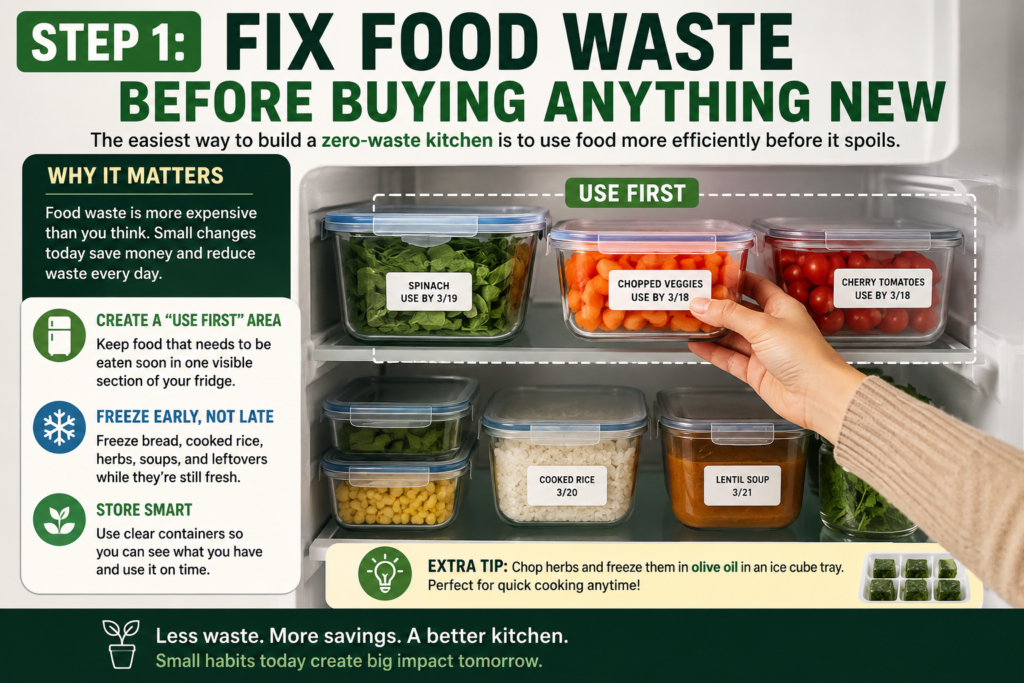
Food waste is usually far more expensive than any plastic packaging problem, especially when considering the cost of fresh food. According to a 2019 USDA Economic Research Report, 30–40% of the U.S. food supply is wasted, costing the average household roughly $1,500 per year. In your own home, that’s like throwing 30% of your grocery budget directly into the bin, contributing to unnecessary waste and single-use plastic waste.
The first fix costs nothing: create a visible plan to track your zero waste journey. “use first” zone in your refrigerator. Whenever something needs to be eaten soon, move it to one clear section at eye level. Once food is visible, people use it, which helps reduce waste and convert food scraps into nutrient-rich soil.
Fresh herbs are a perfect example of invisible waste. We buy them with good intentions, but they often turn to mush within three days. The Prepara Eco Herb Saver solves this mechanically — it keeps roots submerged in water while protecting leaves from dry fridge air, extending herb life by up to three weeks. At around $10, it pays back on the first bunch of cilantro you don’t throw away.
👉 Check the Prepara Herb Saver price on Amazon →
The other free fix: freeze earlier. Don’t wait until food is nearly spoiled. Bread, cooked rice, herbs, soups, shredded cheese, and pasta sauce all freeze well, making them ideal for your reusable produce bags. Freeze while still fresh and you’ll pull from your freezer instead of the trash.
Step 2: Make Food Easy to See and Easy to Use
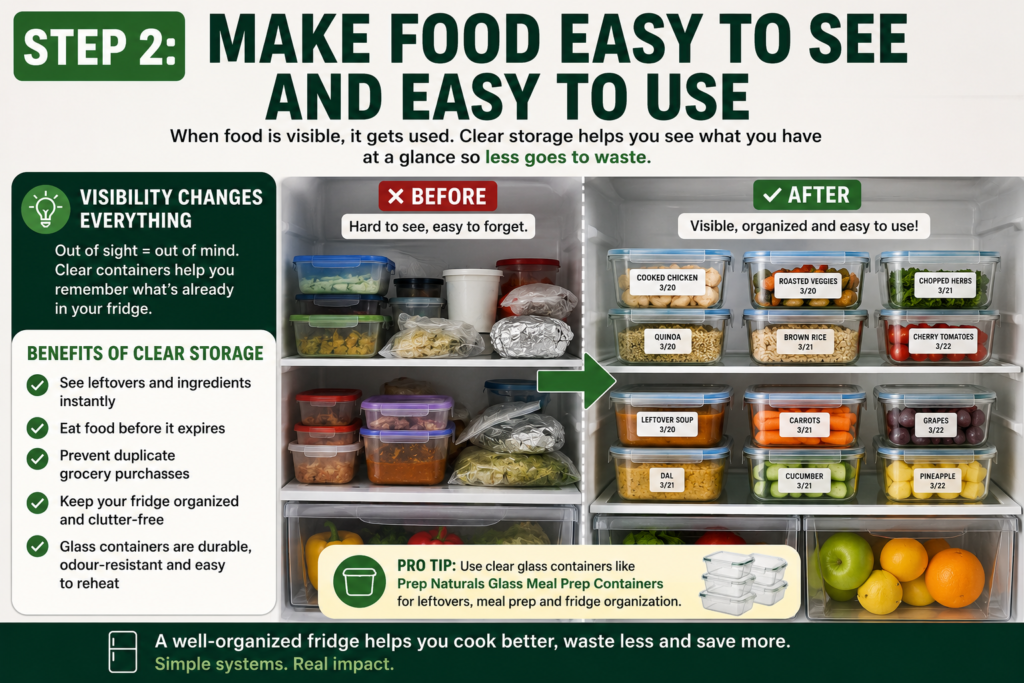
People forget what they can’t see. Opaque containers, overcrowded shelves, and disorganized refrigerators cause perfectly good food to disappear — out of sight, out of mind, into the bin.
Transparent storage containers eliminate this problem and help in managing kitchen waste effectively. Prep Naturals Glass Meal Prep Containers use borosilicate glass that goes from freezer to oven without shattering, doesn’t absorb odors, and doesn’t leach chemicals when heated. From an engineering perspective, glass wins over plastic for two reasons: thermal stability and non-porosity. Plastic micro-cracks under dishwasher heat and hides bacteria; glass is chemically inert and essentially permanent.
A set lasts a decade. That’s a one-time purchase replacing hundreds of disposable containers, thus reducing the number of single-use items sent to landfills.
👉 See current price on Amazon →
Step 3: Replace Disposable Habits Slowly (The ROI of Reusables)
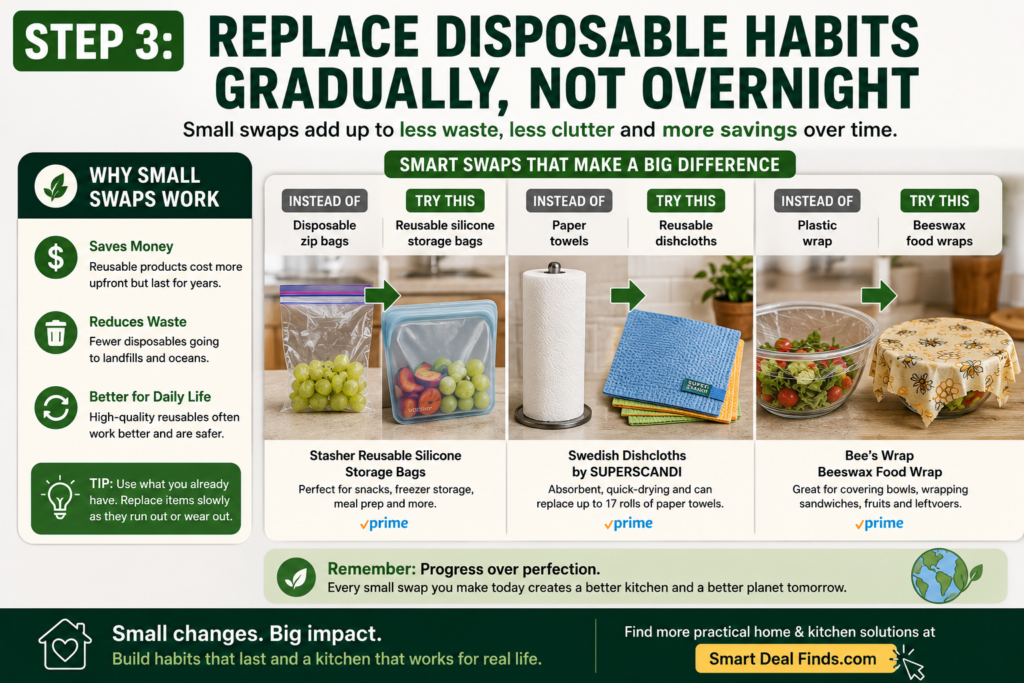
Don’t change everything at once. Replace disposable products gradually as they run out. Here’s where the math gets clear:
The Problem with “Subscription” Items
Paper towels and zip bags are subscription costs — you never own them, you just keep paying. Here’s how to break the cycle:
Reusable Silicone Bags: The Stasher Reusable Silicone Sandwich Bag is leak-proof, works for sous-vide, freezing, and snacks, and replaces roughly 250 single-use bags per year. A $15 set of reusable produce bags vs. ~$25/year in zip bags helps you save money while going zero-waste and avoiding single-use items.
👉 Check Stasher Bag price on Amazon →
Swedish Dishcloths: SUPERSCANDI Swedish Dishcloths are made from cellulose and cotton and are fully compostable at end of life. One cloth replaces approximately 15 rolls of paper towels. At roughly $1.50 per roll, a household using 2–3 rolls a month saves $36–$54 per year from a single $4–$6 cloth.
👉 Check SUPERSCANDI Dishcloths on Amazon →
Beeswax Wraps: One beeswax wrap replaces approximately 52 plastic sandwich bags per year (NRDC household usage data). They’re washable, reusable, and compostable.
Step 4: Prioritize Bulk Buying and Measured Portions
Buying in bulk reduces unit cost by 10–25% versus prepackaged equivalents (USDA). Buying a 25 lb bag of rice instead of 1 lb bags saves roughly 20% per pound and eliminates about 25 small plastic bags yearly for a two-person household (EPA packaging waste data), contributing to your zero waste journey.
How to implement without overbuying: Identify three pantry staples you use weekly (rice, oats, dried beans). Measure your actual weekly use over two weeks. Buy four weeks’ worth in bulk. Store in labeled glass jars.
A kitchen scale is the tool that makes this precise. A digital kitchen scale ($15–$25) This prevents overbuying and portion waste — it pays back quickly by eliminating the guesswork that leads to spoilage and unnecessary waste.
👉 See top-rated kitchen scales on Amazon →
Step 4: Organize Your Kitchen Before Buying More Storage Products
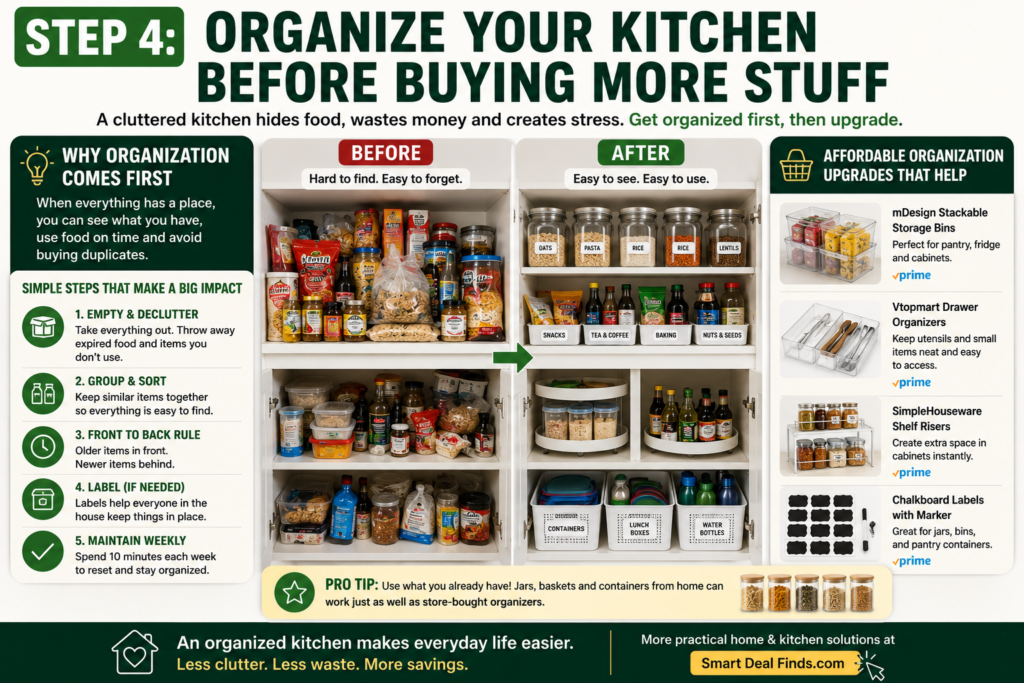
Most cluttered kitchens aren’t too small — they’re disorganized. When you can see that you already have three bags of flour, you stop buying more.
Simplify first. Then, if you need storage upgrades, SimpleHouseware Stackable Cabinet Organizers and Vtopmart Airtight Food Storage Containers create usable pantry space at low cost. This is where organization directly becomes budgeting.
Step 5: Buy Durable Products That Last Longer
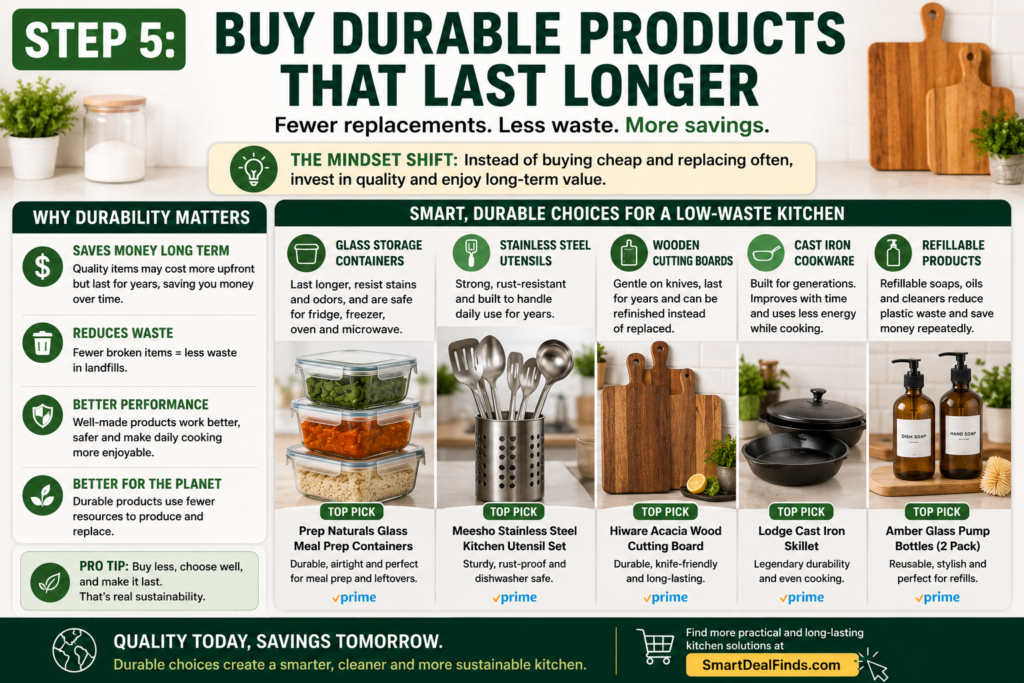
Low-quality kitchen items generate constant waste — cheap plastic cracks, thin utensils warp, coated pans flake within months. Buying fewer but better products, like reusable containers, is the most sustainable (and cheapest) long-term choice, reducing reliance on single-use items.
- Zulay Kitchen Stainless Steel Utensil Set — hygienic, durable, no coating to degrade. Essentially permanent.
- Lodge Cast Iron Skil
👉 Check Lodge Cast Iron price on Amazon →
Step 6: Plan Meals Around Ingredients You Already Have
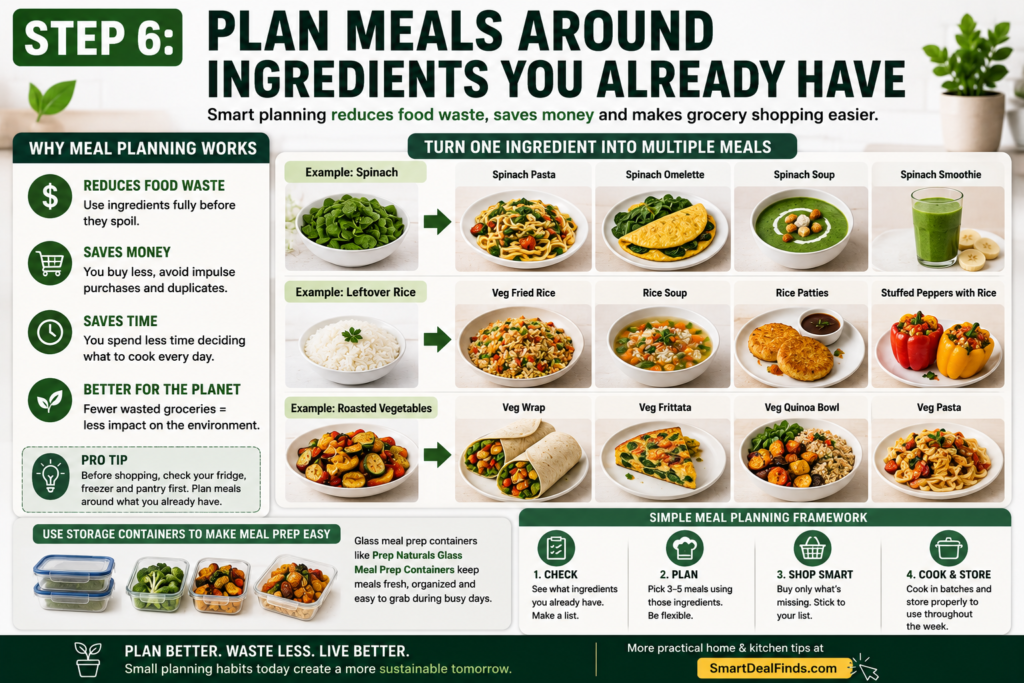
Most grocery waste begins before shopping starts. Without a meal plan, people buy randomly and half the fresh produce never gets used, often resulting in food scraps sent to landfills. A 2020 behavioral study published in the Journal of Consumer Research found households with weekly meal plans reduced impulse purchases by about 25%.
A Magnetic Meal Planner for Refrigerator Keeping the plan visible to everyone promotes sustainable living practices throughout the household. When Wednesday is “Leftover Night” or “Stir-fry Night,” you stop over-buying produce you won’t have time to cook.
Routine checklist:
Freeze or pickle surplus within 48 hours
Track waste for 7 days
Plan three core meals using the same perishables
Use glass jars for leftovers — label with dates
Step 7: Compost Food Scraps (The Final Loop)
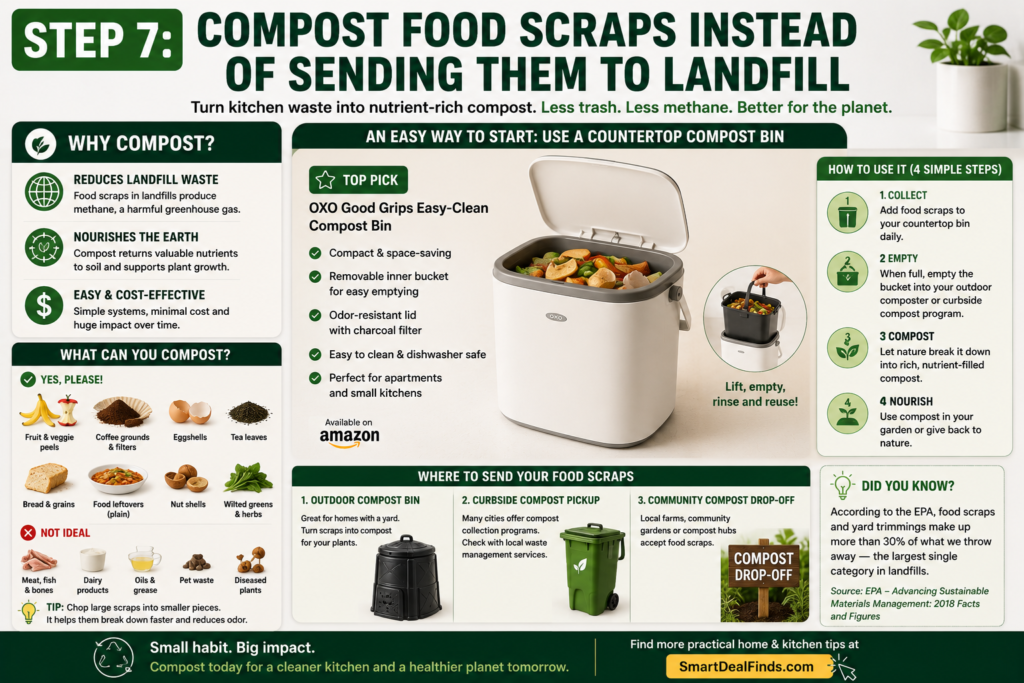
According to the EPA, food scraps and yard trimmings made up 23% of municipal solid waste in 2018. A typical family can divert 100–200 pounds of food waste per year to compost by capturing scraps consistently.
Modern composting doesn’t require a garden. The OXO Good Grips Easy-Clean Compost Bin (~$18) works in small apartments. The lid stays open while you prep and seals tightly enough to prevent fruit flies. It eliminates the odor from your regular trash bin (because rotting organic matter, like coffee grounds, causes the smell) and reduces the volume of waste going to landfill, ultimately helping to create nutrient-rich soil.
Budget alternative: a 2–5 liter lidded container stored in the fridge — empty it weekly to a community compost drop or outdoor bin.
A 2022 municipal survey (City of Portland compost program report) found community compost drop-off participation reduced curbside trash weight by 10–15% in participating neighborhoods.
👉 See OXO Compost Bin price on Amazon →
The Tools of the Trade: Sponges, Scrubbers, and Wipes
Most households replace scrubbers and sponges far more often than necessary — and spend far more than they need to.
The math: A disposable scrubbing pad at $0.25 each, used weekly, costs $13/year and generates 52 pieces of waste. A $6 stainless steel scrubber lasting 9 months replaces that at roughly $8/year — saving $5–$7 annually and eliminating about 48 disposable pads from waste streams (EPA household waste averages).
Cellulose sponges are a great alternative to traditional cleaning products and contribute to your sustainable living goals. are another upgrade worth making. Unlike conventional plastic-backed sponges that shed microplastics, cellulose sponges are plant-based and compostable. They last 3–4 weeks with regular rinsing versus 1–2 weeks for standard sponges.
Best durable scrubbing options: solid dish soap and rags.
- Stainless Steel Scrubber (set of 6) — lasts 9–12 months, eliminates rust on cast iron, no synthetic fibers
- Natural Cellulose Sponges — compostable, no microplastic shedding, 3–4 week lifespan
- Loofah Dish Scrubber — 100% plant-based, biodegradable cleaning products that work on non-stick without scratching are a great addition to your zero waste journey.
👉 See all zero-waste scrubbing options on Amazon →
Zero Waste Kitchen Products: Sustainable Alternatives at Every Price Point
Here’s a practical replacement map — what to swap, what it costs, and what it saves:
| Disposable Item | Sustainable Swap: use reusable produce bags instead of single-use plastic bags for your groceries. | Upfront Cost | Annual Savings |
|---|---|---|---|
| Paper towels (2–3 rolls/month) | SUPERSCANDI Swedish Dishcloths | ~$15 | $36–$54 |
| Zip bags (1 box/month) | Stasher Silicone Bags are a great alternative to plastic wrap or aluminum foil. | ~$15 | ~$25 |
| Plastic wrap | Beeswax wraps | ~$12 | ~$15 |
| Plastic containers | Prep Naturals Glass Containers | ~$35 | $50+ |
| Disposable scrubbers | Stainless steel scrubber | ~$6 | ~$7 |
| Produce bags | Reusable mesh produce bags | ~$10 | ~$10 |
Starter kit — total investment ~$57, estimated first-year savings: $140–$160+
According to a 2021 WRAP study on household interventions, combining portion control with storage changes produced the largest reductions in avoidable food waste — larger than any single product swap alone.
Expert Q&A: How to Build a Zero-Waste Kitchen on a Budget
Q: I have a very tight budget. What’s the single most important item to buy first?
Don’t buy anything first — start with a “Fridge Audit.” Spend 10 minutes pulling everything out, check expiry dates, and create your “use first” zone. If you want to invest your first $20, buy SUPERSCANDI Swedish Dishcloths. The ROI is the highest of anything in this list — they immediately cut your paper towel spending, which is a recurring monthly drain.
Q: Is glass really better than BPA-free plastic for food storage, especially when avoiding single-use items?
From an engineering standpoint, yes, using non-toxic materials is essential for safety. Plastic degrades under dishwasher heat, creating micro-cracks where bacteria hide. Glass is non-porous and chemically inert. Prep Naturals Glass Containers are a one-time purchase that last a decade. BPA-free still means plastic — it still degrades.
Q: How do I compost in a small apartment with no garden?
Start with the OXO Good Grips Compost Bin on your counter, then find your nearest community compost drop-off or municipal brown bin program. Most cities now have them. The OXO bin seals well enough to prevent fruit flies and odor — the lid locks open while you’re prepping, which matters more than people expect.
Q: My family isn’t on board with “Zero Waste.” How do I get them to engage with simple tips for reducing waste?
Don’t call it “Zero Waste” — call it “Efficiency” in reducing kitchen waste. Show them the math: not buying 48 rolls of paper towels saves ~$72/year. When you frame it as money saved rather than sacrifice made, the logic becomes undeniable. The Stasher bags Reusable produce bags are a good starting point because they’re visibly practical — kids especially like the colors and can help with sustainable living.
Q: Are expensive eco-friendly gadgets worth it?
Usually not. You don’t need a $500 electric composter when a $20 bin and a local compost program achieve the same result. Look for products with measurable ROI (replaces X units/year at Y cost), multi-purpose use, and durability ratings. Everything recommended in this guide pays back within 3–6 months.
Q: What are the key principles or rules of zero-waste living?
The key principles of zero-waste living are often summarized as the 5 Rs: Refuse what you don’t need, Reduce what you use, Reuse items as much as possible, Recycle materials correctly, and Rot (compost) organic waste. These habits help minimize landfill waste, conserve resources, and promote a more sustainable lifestyle.
Final Thoughts: Progress, Not Perfection
No kitchen will ever be perfectly waste-free, and that’s fine. Packaging still exists, but we can reduce unnecessary waste by opting for sustainable alternatives. Food occasionally spoils. Busy weeks happen.
What matters is building systems that work consistently in everyday life. Once food is easier to see and organize, less of it gets wasted. Once disposable habits slowly get replaced with reusables, monthly expenses start dropping naturally. Once kitchens feel less cluttered, cooking becomes easier, and it’s simpler to manage food storage without plastic wrap or aluminum foil.
Three KPIs to track your progress:
- Pounds diverted to compost monthly (target: 50–100 lb for a family of four)
- Dollars saved on groceries (target: 10–30% within 3 months)
- Disposable items eliminated per year (target: 200–500)
Start today: Reuse one jar, track one week of waste, and look up your nearest compost drop-off. Small, measured steps — real financial and environmental returns.
Related Articles You May Also Like
Related Articles
- Smart Deal Finds — Home Organization Ideas — Practical storage ideas that reduce clutter and make small kitchens easier to manage.
- Smart Deal Finds — Smart Kitchen & Home Gadgets — Affordable tools and problem-solving products for everyday life.
- Smart Deal Finds — Budget-Friendly Amazon Finds — Practical, durable products focused on long-term value.
- EPA Composting at Home Guide — Official guidance on composting food waste at home.