
A well-designed balcony can become one of the most enjoyable spaces in your home. Whether you live in a small apartment in New York, a condo in Florida, or a townhouse in Texas, a balcony offers valuable outdoor living space that shouldn’t go to waste.
Unfortunately, many balconies end up being used as storage areas for boxes, unused furniture, or seasonal items. As a result, homeowners and renters miss out on an opportunity to create a comfortable space for relaxing, entertaining, or enjoying fresh air.
The good news is that designing a beautiful balcony doesn’t require a large budget or professional design experience.
By focusing on a few key design principles, you can transform even a small balcony into a functional and inviting outdoor retreat.
In this step-by-step guide, we’ll walk through the entire process—from planning the layout to choosing furniture, adding greenery, creating privacy, and keeping the space organized.
Start with two concrete design rules
- Prioritize usable footprint: measure the balcony and reserve at least 60–70% of the area for circulation and primary function (seating or dining). If width < 1.2 m (4 ft), design linear seating and avoid large tables.
- Define the main function and layout axis: choose one dominant use (relax, dine, work, or garden) and align furniture and planters along a single axis to keep sightlines and traffic clear.
Step 1: Decide How You Want to Use the Space
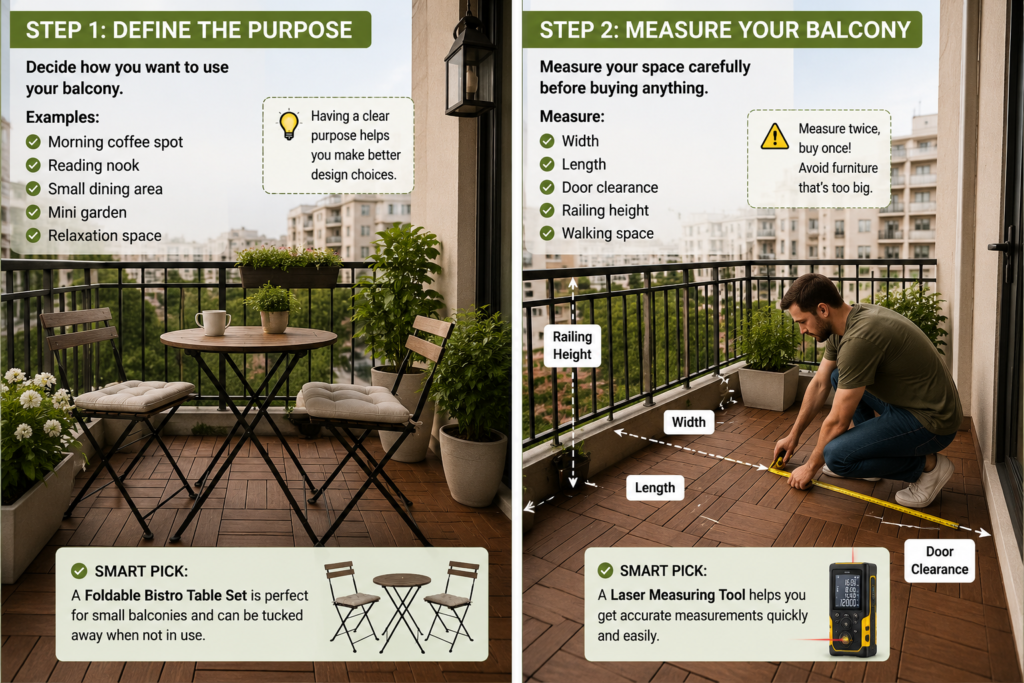
Before buying furniture or decorations, think about how you actually want to use your balcony.
Ask yourself:
- Do you want a quiet reading corner?
- A place to enjoy your morning coffee?
- A small outdoor dining area?
- A gardening space?
- A relaxing retreat after work?
Knowing the purpose of your balcony will make every other design decision much easier, especially when considering balcony decor options.
For example, if your goal is to enjoy meals outdoors, a small table can create a cozy dining nook on your balcony, enhanced by rattan chairs, a Foldable Bistro Table Set can provide seating without taking up valuable space when not in use.
Step 2: Measure Everything Before You Buy
One of the most common balcony design mistakes is purchasing furniture that doesn’t fit your small apartment balcony.
Measure:
- Balcony width and length
- Door swing area
- Railing height
- Available walking space
Leave enough room to move comfortably around furniture.
Many homeowners find that using a A Laser Measuring Tool can be invaluable when planning your balcony design ideas to ensure everything fits perfectly. A measuring tape helps ensure accurate measurements before making purchases for your balcony furnishing.
Step 3: Upgrade the Flooring First
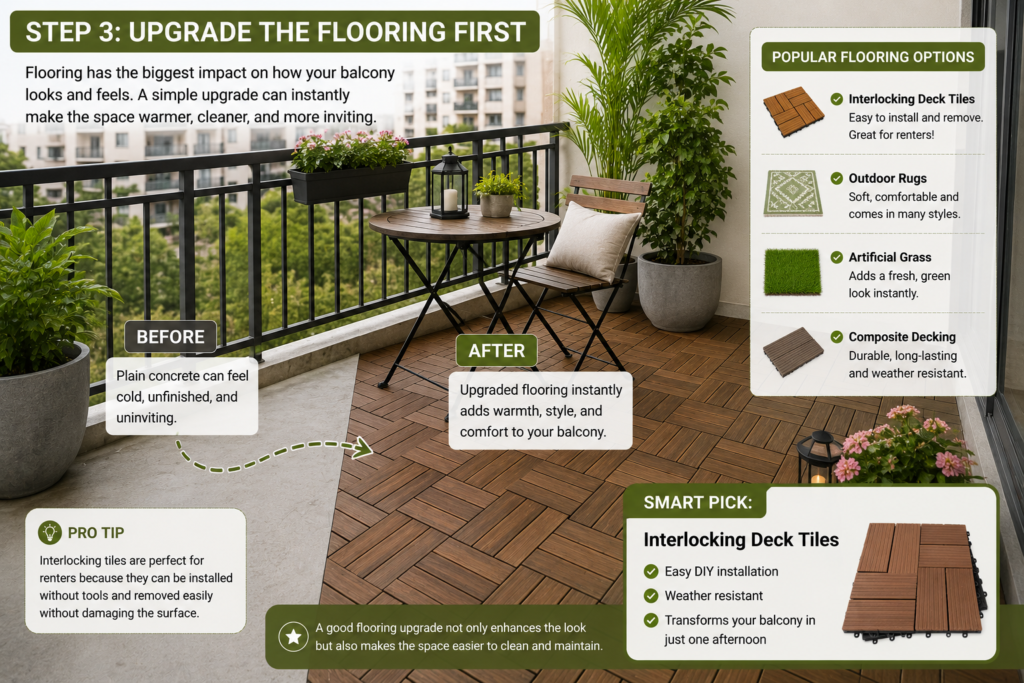
Flooring often has the biggest impact on how a balcony feels.
Many balconies come with plain concrete flooring. While functional, concrete often feels cold, unfinished, and uninviting. As a result, even a balcony with great furniture can still feel uncomfortable.
Fortunately, flooring is one of the easiest upgrades you can make.
In fact, many homeowners are surprised by how dramatically a flooring upgrade changes the overall appearance of the space.
If you’re renting, Interlocking Deck Tiles are a practical choice for enhancing the balcony floor of your outdoor space. are often a practical solution because they can usually be installed without permanent modifications. Meanwhile, homeowners may prefer composite decking for a more permanent transformation.
Popular options include:
Many renters prefer Interlocking Deck Tiles because they are easy to install and can usually be removed without damaging the original surface.
Step 4: Choose Furniture That Fits the Space
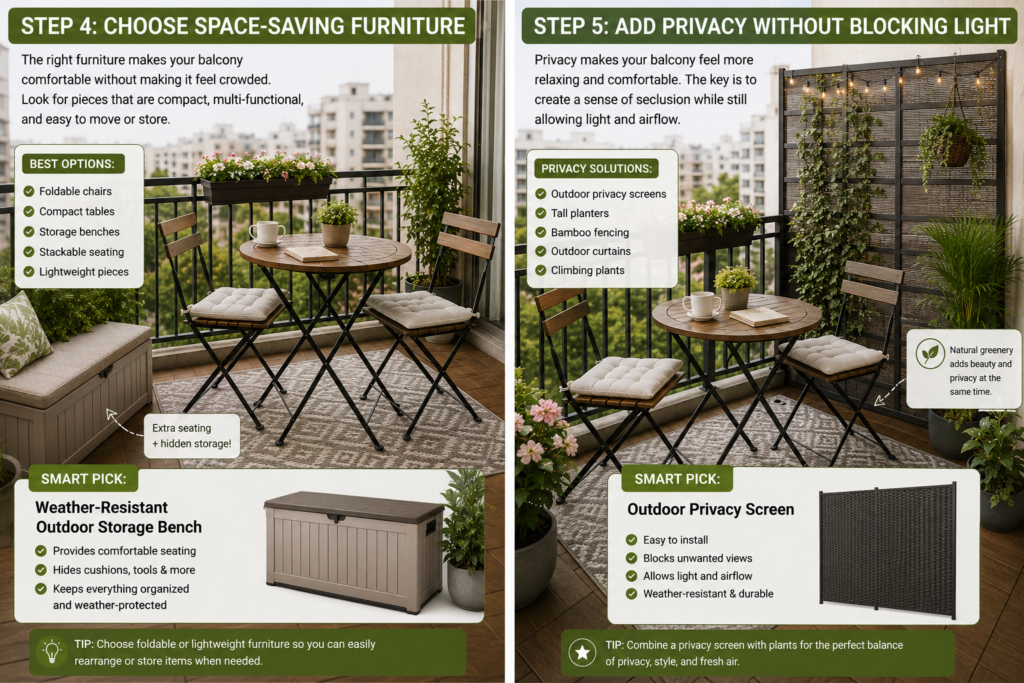
When it comes to balcony furniture, smaller is usually better.
Look for pieces that offer flexibility and multiple functions.
Good options include:
For balconies under 50 square feet, a Foldable Bistro Table Set offers enough room for dining or working while remaining easy to store when needed.
If you need extra storage for your small outdoor space balcony, consider using wicker baskets. Weather-Resistant Outdoor Storage Bench Rattan furniture can provide seating while keeping cushions, gardening supplies, and outdoor accessories organized.
The same principle applies indoors as well. If you’re trying to maximize every square foot of your home, check out our guide on decorating ideas for a small area balcony. How to Design a Small Living Room That Feels Spacious, Stylish & Functional for more space-saving ideas.
Step 5: Create Privacy Without Making the Space Feel Closed In
One of the biggest reasons people stop using their balconies is a lack of privacy. At first, the space may look beautiful, but if you constantly feel exposed to neighbors or nearby buildings, you’ll naturally spend less time there.
Fortunately, this problem is usually easy to solve with some clever small balcony ideas. Instead of completely blocking the space with large barriers, focus on creating a sense of separation while still allowing sunlight and fresh air to enter.
For example, an Outdoor Privacy Screen can enhance your balcony decor and make your balcony feel more intimate. can help define the space without making it feel enclosed. Additionally, tall planters and climbing plants can provide a natural privacy solution while adding greenery at the same time.
Step 6: Add Shade for Comfortable Summer Use
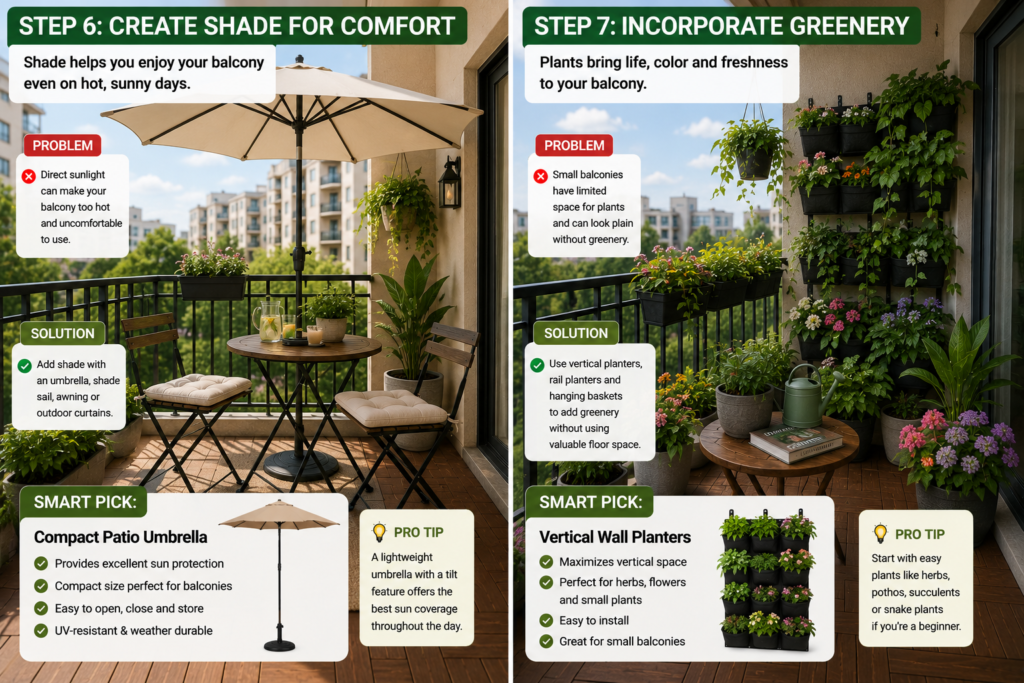
Direct sunlight can make a balcony difficult to enjoy during warmer months, so consider using a small table with an umbrella for shade.
Adding shade helps extend the amount of time you can comfortably spend outdoors.
Options include:
A Compact Patio Umbrella Interlocking Deck Tiles work especially well for small apartment balconies where space is limited.
Step 7: Bring the Space to Life with Plants
Plants add color, texture, and a sense of calm to any outdoor area, making them essential for your balcony garden.
You don’t need a large balcony to create a beautiful green space; even a small outdoor space can be transformed.
Easy options include:
- Herbs
- Succulents
- Lavender
- Snake plants
- Pothos
- Seasonal flowers
Many apartment residents use IKEA furniture for their small area balcony designs. Vertical Wall Planters to grow herbs and flowers without sacrificing floor space, consider some small balcony ideas.
Vertical solutions aren’t just useful outdoors. Similar techniques can also help maximize storage inside your home. You may enjoy our article on how to decorate your apartment balcony with stylish elements. Vertical Victory: 4 Genius Ways to Use Your Bathroom Walls.
Step 8: Use Lighting to Create Ambiance
The right lighting can completely change the atmosphere of a balcony after sunset.
Consider adding:
If you enjoy spending evenings outdoors, Solar-Powered String Lights can instantly create a warm and welcoming atmosphere without increasing your electricity bill.
Simple lighting often makes a bigger impact than expensive décor.
Step 9: Keep Clutter Under Control
No matter how beautiful a balcony looks on day one, clutter has a way of slowly taking over, which is why smart storage solutions are key in balcony design ideas.
Gardening tools get left outside, often cluttering the space and detracting from decorating ideas. Cushions end up stacked in corners, taking away from your small balcony ideas. Seasonal decorations start accumulating.
Before long, the balcony begins functioning as a storage area instead of a place to relax, which is not ideal for a small outdoor space.
Therefore, it’s important to plan storage before clutter becomes a problem.
A Waterproof Outdoor Storage Box provides a simple solution by giving frequently used items a dedicated home while protecting them from rain, dust, and sun exposure.
Smart organization is the foundation of any functional home. For more storage inspiration, take a look at our guide on balcony design ideas. 5 Best Amazon Home Organization Products That Save Space.
A common mistake is leaving cushions and gardening tools exposed to the weather. Proper storage not only keeps the balcony tidy but also helps outdoor items last longer.
Step 10: Add Comfort and Personal Style
Once the essentials are in place, it’s time to make the balcony feel like your own.
Consider adding:
Water-Resistant Outdoor Pillow Covers are an easy way to add color and personality while standing up to outdoor conditions.
Creating a comfortable balcony follows many of the same principles used when designing productive indoor spaces. For additional inspiration, read about various balcony ideas that can transform your outdoor area. How to Design a Home Office at Home: A Complete Guide to Comfort, Productivity & Style.
Common Balcony Design Mistakes to Avoid
Buying Furniture That’s Too Large
Always measure before purchasing. Oversized furniture can make even a decent-sized balcony feel cramped, so opt for sleek, modern designs that complement your balcony ideas.
Ignoring Weather Conditions
Choose materials designed for outdoor use whenever possible.
Overdecorating
Adding too many decorative items can create visual clutter and reduce functionality in your balcony interior design.
Forgetting About Lighting
Many people focus only on daytime use and overlook how the space will feel in the evening.
Neglecting Storage
Clutter can quickly make any space feel smaller than it really is.
The same challenge often appears inside bathrooms, where countertops become crowded with everyday essentials. For more organization ideas, check out IKEA’s selection of products designed for small balcony spaces. The Vanity & Sink Revolution: 4 Genius Ways to Reclaim Your Countertop.
A Simple Balcony Layout That Works for Most Homes
If you’re not sure where to start, try dividing the balcony into three functional zones: dining, lounging, and a balcony garden.
Seating Area
- Foldable table and chairs
- Comfortable cushions
Green Zone
- Vertical planters are excellent for maximizing space on a tiny balcony while adding greenery.
- Potted plants
Relaxation Zone
- Outdoor rug
- Soft lighting
- Decorative accents
This simple approach creates a balanced space on your balcony without making it feel crowded, which is crucial for interior design.d.
FAQ — Common Questions About How to Design a Balcony
How do I maximize space on a tiny balcony?
Use foldable furniture, vertical planting, wall-mounted shelves and multipurpose pieces like benches with storage.
What plants work best on balconies?
Choose plants by light and wind exposure: herbs and succulents for sun, ferns and begonias for shade, and sturdy shrubs for windy sites.
Can I install power or water on a balcony?
Yes, but consult a licensed electrician or plumber and check building rules. Use weatherproof fixtures and proper drainage for water features.
Related Smart Home Guides
If you’re looking to improve other areas of your home, these articles may be helpful:
- 5 Best Amazon Home Organization Products That Save Space
- Vertical Victory: 4 Genius Ways to Use Your Bathroom Walls
- The Vanity & Sink Revolution: 4 Genius Ways to Reclaim Your Countertop
- How to Design a Home Office at Home: A Complete Guide to Comfort, Productivity & Style
- How to Design a Small Living Room That Feels Spacious, Stylish & Functional
Final Thoughts
Designing a balcony is not about following strict design rules or spending thousands of dollars on outdoor furniture; instead, it’s about finding unique decorating ideas that reflect your style.
Instead, it’s about creating a space that supports the way you want to live while decorating your balcony.
For some people, that means a quiet place to enjoy a morning coffee before work. For others, it may be a small garden, an outdoor dining area, or a peaceful retreat after a long day.
The most successful balcony designs focus on comfort, functionality, and simplicity, often incorporating elements from Emily Henderson’s house balcony design.
Start with the basics: define the purpose of the space, choose furniture that fits properly, add greenery, improve lighting, and create smart storage solutions for your outdoor space.
Then, over time, continue adding personal touches that make the space feel uniquely yours.
Even the smallest balcony has the potential to become a favorite spot in your home.