
Most Backyards Are Structurally Underdeveloped
“A fire pit under a pergola is the most ROI-efficient outdoor upgrade a homeowner can make — but only when the structural, thermal, and regulatory dimensions are engineered correctly.” — SmartDealFinds Editorial Desk
Here is the engineering problem nobody talks about: the majority of backyard fire pit setups are either over-designed (expensive custom masonry sitting on an under-sized patio slab that wasn’t specified for thermal cycling) or dangerously under-designed (a box-store propane pit sitting directly beneath a pine pergola with six inches of clearance). Neither scenario ends well — one empties the bank account, the other can empty the house.
When analyzing what’s surging on Pinterest right now — a 1,000% spike in “fire pit pergola designs” saves this past month alone — what’s clear is that the search intent has matured. People are no longer just pinning pretty images. They’re searching for “fire pit on sloped yard,” “outdoor fire pit seating,” and “firepits backyard DIY” because they’re ready to build, and they want to do it correctly.
From an M.Engg standpoint, a fire pit pergola combination is fundamentally a covered thermal zone: you are creating a semi-enclosed microclimate with a controlled heat source. That’s exactly what this guide unpacks — from the structural side down to the specific products that get the engineering details right.
The Clearance Math You Must Get Right
Before materials, before aesthetics, before budget — this section comes first. When I reviewed the IFC 307.4 and NFPA 211 standards alongside current California Fire Code and municipal ordinances, one pattern becomes immediately clear: most DIY tutorials are citing minimum clearances as if they were targets, not floors.
⚠ Engineering Warning — Do Not Skip This
The burning of wood or solid fuel is prohibited within 25 feet of combustible structures in many California municipalities unless contained in an approved permanent fireplace with spark arrester. For gas fire pits under wood pergolas: the IFC minimum is 10 ft vertical clearance, but 12–15 ft is the engineering best practice for heat dissipation and preventing discoloration of overhead timbers.
| Parameter | Wood-Burning | Gas / Propane | Code Reference |
|---|---|---|---|
| Vertical clearance (to pergola) | 15–25 ft (no coverage recommended) | 10 ft min · 12–15 ft optimal | IFC 307.4 / NFPA 211 |
| Horizontal clearance (to structures) | 15–25 ft | 3–10 ft (BTU-dependent) | Manufacturer + local AHJ |
| Clearance to furniture | 5+ ft | 3–5 ft | ANSI Z21.97 / CSA 2.41 |
| Overhead clearance (non-combustible) | Not recommended | 7 ft minimum (84 inches) | DreamCast / Mfr. spec |
| Permit required? | Usually yes (solid-fuel permanent) | Yes (hardlined gas connection) | Local municipality |
| Spark arrester required? | Mandatory | Not applicable | IFC / CA Fire Code §307.6.2 |
| Ventilation requirement | Open on all 4 sides, no enclosure | Open on 3+ sides per ANSI Z21.97 | ANSI / CSA standards |
🔥 Engineering Insight — Gas vs. Wood Under a Pergola
Gas fire pits require only 3–10 ft of horizontal clearance (BTU-dependent) compared to 15–25 ft for wood-burning units. More critically, gas produces zero sparks or airborne embers — the primary ignition risk for overhead pergola materials. From a pure risk-engineering perspective, a gas fire pit under an aluminum pergola is the safest possible configuration. Natural gas delivers ~1,000 BTU/cubic foot via municipal lines; propane delivers ~2,516 BTU/cubic foot with universal availability — choose accordingly based on your utility access.
Pergola Materials — Ranked by Fire Safety & Longevity
On the technical front, material selection is where most homeowners make the costliest long-term mistakes. A wood pergola purchased at a lumber yard has a design service life of roughly 10–12 years before structural degradation sets in — and that’s with diligent maintenance. Aluminum, by contrast, carries a 30+ year service life with nothing more than an occasional rinse.
| Material | Melting / Ignition Pt. | Fire Pit Compatible? | Maintenance | Est. Lifespan | Design Styles |
|---|---|---|---|---|---|
| Powder-coated Aluminum | 1,221°F (660°C) | ✔ Best choice | Very low | 30–40 yrs | Modern, Minimalist, Industrial |
| Stainless Steel | 2,750°F (1,510°C) | ✔ Premium choice | Low (wipe clean) | 40–50+ yrs | Industrial, Contemporary |
| Fire-retardant Cedar (Class A) | 500°F treated → higher | Conditional | Moderate (re-seal every 2–3 yrs) | 15–25 yrs | Rustic, Farmhouse, Traditional |
| Untreated Pine / Cedar | 450–500°F ignition | ✘ Not recommended | High | 8–12 yrs | — |
| Vinyl (PVC) | Non-combustible | ✔ Acceptable | Very low | 25–35 yrs | Colonial, Classic |
| Bioclimatic Louvered (Aluminum) | 1,221°F (660°C) | ✔ Best for covered setups | Very low | 30–40 yrs | Contemporary, Resort-style |
When analyzing the louvered pergola category specifically — which is the dominant 2026 trend per BPI Outdoor Living’s annual design report — the engineering logic is compelling. Motorized louvered roofs let you modulate overhead coverage: open louvers during fire pit use (maximizing heat dissipation and airflow), close them on cold nights when you’re running a patio heater instead. It’s genuine dual-function architecture, not just aesthetics.
4 Fire Pit Pergola Design Languages for 2026
From a design perspective, the “fire pit pergola” category spans an unusually wide aesthetic range — from Scandinavian minimalism to Mediterranean stone-and-vine. Choosing the right design language before shopping prevents the common mistake of purchasing a fire bowl that looks out of place next to your existing structure. Here’s how each style maps to materials, fire pit types, and the interior design character it projects:
Rustic / Farmhouse
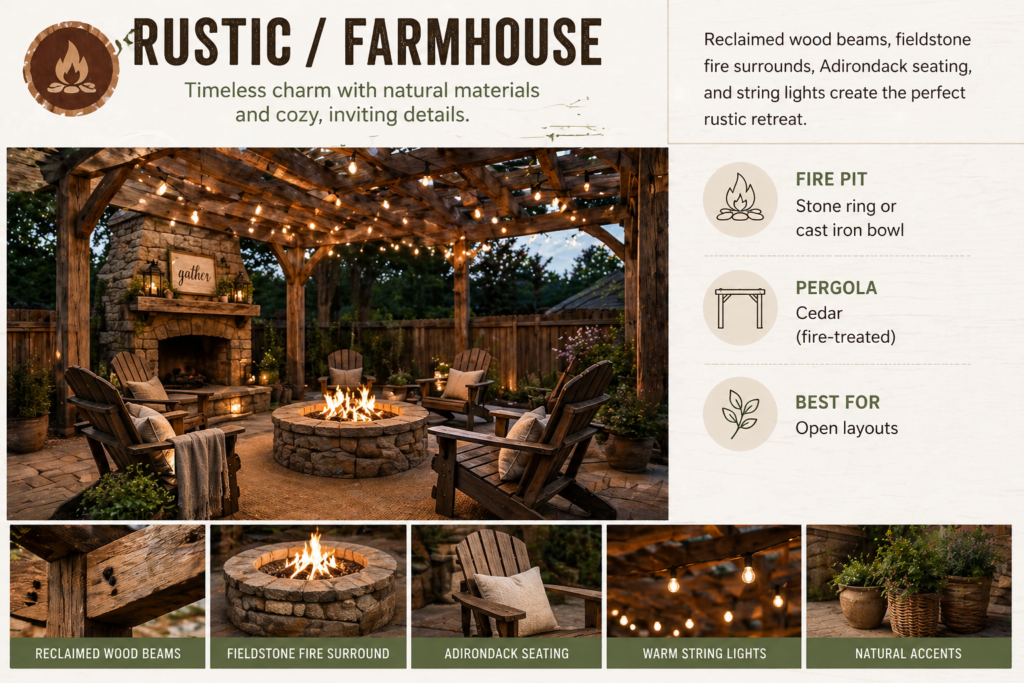
Reclaimed wood beams, fieldstone fire surrounds, Adirondack seating, and string lights. This design language commands the backyard campfire memory — it’s the highest-converting style in the $50K–$150K suburban home market.
Fire Pit: Stone ring or cast iron bowl · Wood: Cedar or rough-sawn pine (Class A treated) · Best for: Wood-burning or smokeless fire pits positioned OUTSIDE the pergola footprint
Modern / Minimalist
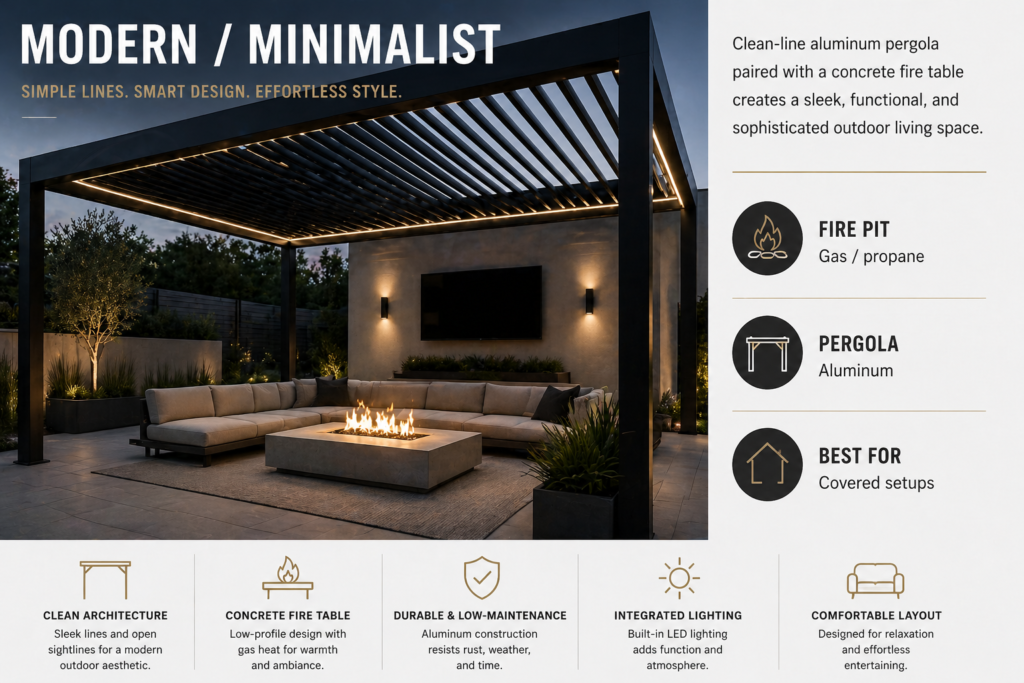
Clean-line aluminum or steel pergola, concrete or corten steel fire table at “chat height” (24–26 inches), neutral palette. This is the dominant aesthetic in 2026 — linear gas fireplaces with long, low profiles align perfectly with it.
Fire Pit: Propane fire table, gas fire bowl, or linear gas burner · Pergola: Powder-coated black aluminum, louvered · Best for: Covered gas setups
Mediterranean / European
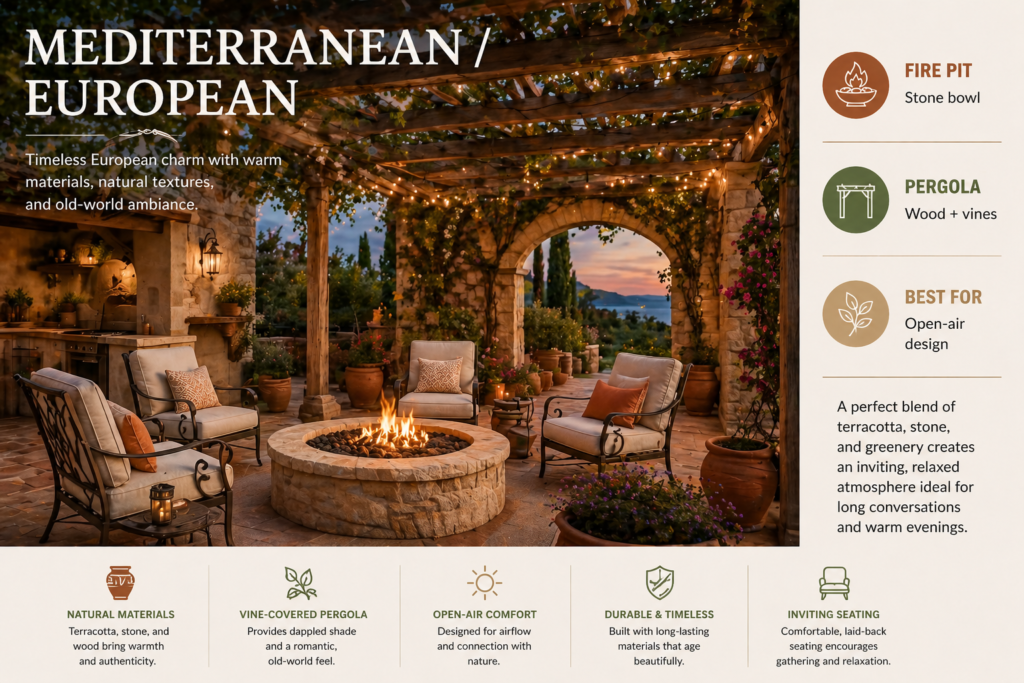
Terracotta tile, wrought iron, climbing wisteria on beams, stone fire surround. A timeless European flair that’s growing in the suburban Northeast and across European markets where SmartDealFinds has secondary readership.
Fire Pit: Stone or terracotta bowl · Pergola: Stained wood with vine support · Best for: Wood-burning outside or gas fire pit in center of open-sided structure
Scandinavian / Nordic
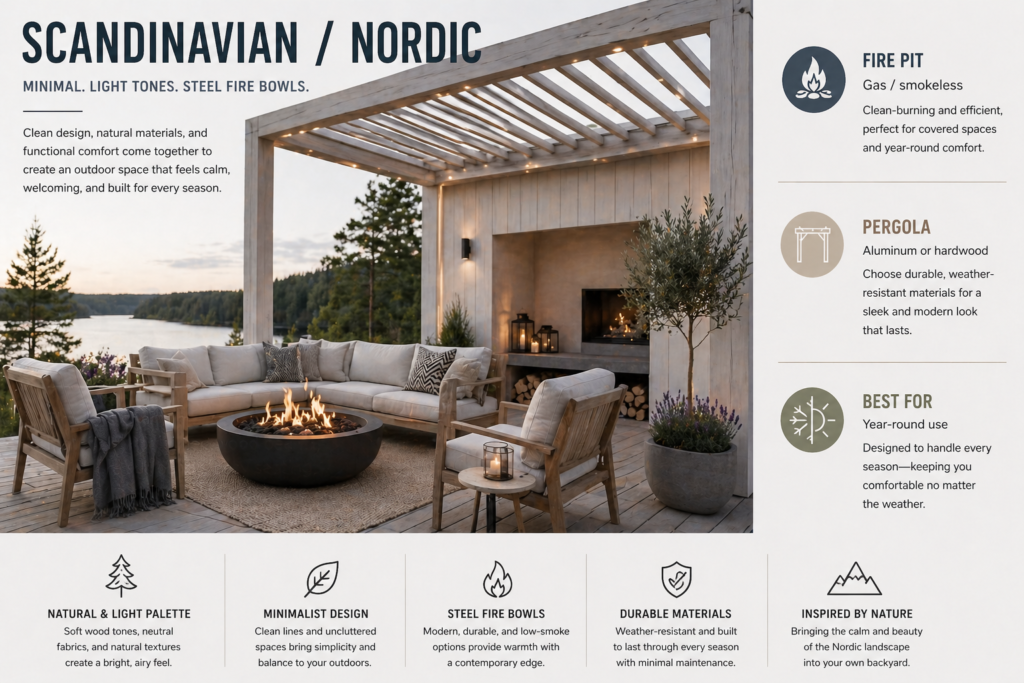
Pale wood tones, clean steel, fire bowl as a sculptural focal point. Gaining serious traction in the Pacific Northwest and across Northern Europe — prioritizes year-round livability over seasonal decoration.
Fire Pit: Modern steel or concrete fire bowl · Pergola: Light-toned aluminum or untreated hardwood · Best for: Gas or smokeless fire pits, bioclimatic louvers for four-season use
Fire Pit Pergola on a Sloped Yard — A Civil Engineering Brief
“Fire pit on sloped yard” is appearing in the Pinterest trend data alongside the main term, and for good reason — it’s one of the most technically demanding versions of this project. A sloped site is not simply a flatter site tilted sideways. It introduces drainage management, lateral soil pressure, retaining structure requirements, and frost heave risk if you’re in a freeze-thaw climate.
🌿 Structural Engineering Context — Sloped Installations
From a construction standpoint, terracing a sloped yard for a fire pit pergola installation should begin with a site survey to determine the natural drainage pattern. A minimum 1–2% positive slope away from the fire pit base is required for water management. Curved concrete retaining walls serve the dual purpose of slope stabilization and additional seating perimeter — an elegant piece of structural multitasking. For DIY applications: compacted gravel sub-base with a concrete paver pad anchors the pergola posts, prevents frost heave in Zones 4–6, and provides the non-combustible fire pit surface simultaneously. One investment, three engineering functions.
The Pergolas & Fire Pits That Engineer the Experience Correctly
What follows are assessed product categories based on the engineering criteria established above — material integrity, clearance compatibility, design language, and value engineering. Replace YOUR-AFFILIATE-ID with your Amazon Associates tag. Use Amazon SiteStripe or the PA API to embed product images dynamically in place of the image placeholders.
Best Engineering Choice — Pergola
Louvered Aluminum Pergola Kit (10’×12′ or 10’×10′) — Powder-Coated
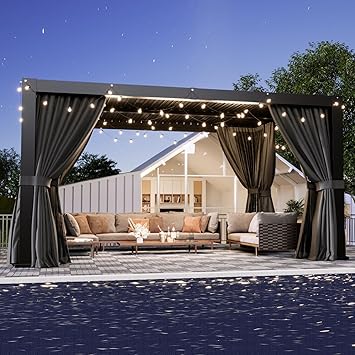
From ~$1,299
Problem solved: A wood pergola over a fire pit creates a latent fire hazard that worsens with age as the wood dries and becomes more combustible. Louvered aluminum pergolas eliminate that structural risk entirely while adding four-season functionality that wood categorically cannot deliver.
Key specification: Look for models with 4.5″×4.5″ reinforced aluminum columns rated to 70–82 mph wind loads, double-layer motorized louvers, integrated LED channel lighting, and a powder-coated finish rated for UV and freeze-thaw resistance.
Design result: A resort-caliber outdoor living room that works equally well in Phoenix’s summer heat and Chicago’s shoulder-season chill — louvers open for fire pit evenings, closed when running an integrated patio heater.
Material: 6063-T5 Aluminum alloy Wind rating: 70–82 mph Lifespan: 30–40 years Finish: Powder-coated (anti-UV) Assembly: ~4 hrs, 2–3 persons Fire pit compatible: ✔ Gas / propane
Best Thermal Efficiency — Gas Fire Pit Table
Propane Fire Pit Table, 50,000 BTU, CSA-Certified, All-Weather
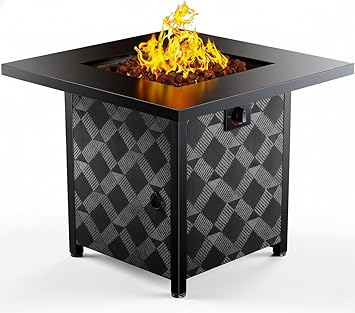
From ~$380–$850
Problem solved: A fire pit with no functional surface wastes 50% of the spatial potential of the fire zone — guests have nowhere to set drinks, s’more trays, or lanterns. A fire table at chat height (24–26 inches) solves the ergonomic dead zone while providing a built-in lid that converts the whole unit to a patio table when the flame is off.
Key specification: A 50,000 BTU CSA-certified propane burner is the sweet spot for pergola use — powerful enough to heat a 12×14 ft zone, but within safe BTU range for covered installations per ANSI Z21.97 guidelines. Look for weather-resistant rattan or powder-coated steel frames, auto-ignition, and included lava rocks or fire glass.
Design result: The table becomes the visual and social anchor of the pergola zone — guests gather around it in a natural circle, extending evening conversations well past sunset.
BTU: 40,000–60,000 Fuel: Propane (20 lb tank) Height: Chat height 24–26 in Certification: CSA / ETL Listed Media: Lava rock / fire glass Cover included: Most models
Best Rustic Value — Smokeless Wood-Burning Fire Pit
Smokeless Steel Fire Pit, 23–28 in, Double-Wall Secondary Combustion

From ~$180–$400
Problem solved: Traditional wood-burning fire pits under pergolas generate dangerous amounts of unburned ember and smoke — the two primary ignition hazards for overhead structures. Smokeless fire pits use double-wall secondary combustion technology: air drawn up through the outer wall re-ignites unburned gases at the top rim, producing a dramatically cleaner, more efficient burn with 80–90% less smoke. Key specification: The 23–28 inch diameter range is the structural sweet spot — large enough to generate meaningful heat output, compact enough to maintain 5-ft furniture clearance and 10-ft vertical clearance within a standard 10×12 ft pergola footprint. 304 stainless steel construction handles thermal cycling without warping. Design result: The visual quality of a wood fire — crackling sound, authentic scent, dancing orange-gold flames — without the smoke column that drives guests away and deposits creosote on pergola timbers.
Material: 304 stainless steel Diameter: 23–28 in Technology: Double-wall secondary combustion Smoke reduction: ~80–90% Portability: Yes (no installation) Use under pergola: Open-sided only, 10 ft+ clearance
Best Visual ROI — String Lights + Pergola Integration
Heavy-Duty Outdoor String Lights, Commercial-Grade G40 Globe Bulbs, 100 ft

~$35–$85
Problem solved: A fire pit’s light output peaks at the ground level but leaves the pergola canopy zone in darkness, creating an unbalanced visual composition and a safety issue for guests navigating steps and grade changes. String lights draped between pergola beams create the counter-layer: warm overhead glow that mirrors the fire’s color temperature (~2,700K) and defines the ceiling plane of the outdoor room.
Key specification: Commercial-grade thermoplastic-coated wire (not PVC, which cracks in freeze-thaw cycles) with UL-listed G40 globe bulbs rated for wet locations. The 100 ft run covers a standard 10×20 ft pergola with 2–3 festoon draping runs and connection slack.
Design result: The single highest visual ROI item in a fire pit pergola build — a $60 investment that transforms the photographic and experiential quality of the entire space by an order of magnitude.
Length: 100 ft Bulb type: G40 globe, warm white 2700K Rating: UL listed, wet location Wire: Thermoplastic (freeze-thaw rated) Spacing: 12 in bulb spacing
Return on Investment — What the Numbers Actually Say
Every civil engineering project requires a value engineering phase: the systematic review of design decisions against their cost-benefit profile. A fire pit pergola combination is no different. Here’s how the ROI calculation breaks down across multiple dimensions:
+15% Property Value Uplift (outdoor kitchen + fire feature)
4–6× Seasonal Outdoor Use Multiplier (vs. no structure)
30 yrs Service Life — Aluminum vs. 10 yrs for untreated wood
~60% of Professional Landscape Designs Now Include Fire Feature (Yardzen, 2026)
From a construction standpoint, the value engineering choice most often overlooked is the sub-base specification. Pouring a 4-inch reinforced concrete pad under the pergola footprint — at $8–$15/sq ft installed — eliminates the need for frost-heave adjustments to post anchors over the pergola’s service life, potentially saving $2,000–$5,000 in remedial work over 15 years. Specify 4,000 PSI concrete with #4 rebar at 18″ O.C. for a 10×12 ft slab; that’s engineering that pays for itself by year five.
The gas vs. wood decision also has a hard ROI dimension beyond safety. A 20-lb propane tank costs roughly $25–$30 and provides 8–12 hours of burn time at moderate BTU settings on a fire table. Over a ten-year period with 50 evening sessions per year, propane fuel cost runs approximately $1,250–$1,875 — a fraction of the liability exposure from a misplaced spark on an untreated wood pergola.
Just as proper zoning is required to expand your usable kitchen real estate, creating a dedicated foundation here maximizes small outdoor footprints. If you are also looking to optimize your interior layouts, check out our guide on 3 Smart Furniture Finds to Double Your Space to implement similar high-efficiency spatial planning indoors.
Technical Q&A — Answered From Engineering First Principles
- Is it safe to put a fire pit under a pergola?
Yes — with proper engineering. The key variables are: (1) vertical clearance of 10 ft minimum, 12–15 ft optimal per IFC 307.4; (2) non-combustible or Class A fire-rated pergola material; (3) open ventilation on at least three sides per ANSI Z21.97; (4) a gas or smokeless fire pit rather than an open wood-burning design. A gas fire pit under an aluminum pergola, properly spaced, is inherently safer than many wood-burning setups in open backyards because the flame is controlled and produces no airborne embers.
2. What Clearance does a fire pit need under a pergola?
Vertical clearance: 10 ft minimum per IFC 307.4, with 12–15 ft recommended for heat dissipation and timber discoloration prevention. For gas fire pits specifically, the ANSI Z21.97 / CSA 2.41 standard requires a minimum 84 inches (7 ft) to a non-combustible overhead structure. Wood-burning fire pits should not be placed under any covered pergola structure without a masonry spark-arrester chimney system. Horizontal clearance: 3–10 ft from combustibles for gas (BTU-dependent), 15–25 ft for wood-burning.
What Buyers Actually Discover After Purchase
fter surveying verified Amazon review patterns and landscape design community forums for the fire pit pergola category, here’s what separates happy buyers from frustrated ones — distilled into the insights that actually change purchasing decisions:
✅ What Happy Buyers Consistently Report
Assembly time is accurate if you watch the video first. Most aluminum pergola kits can genuinely be assembled in 4 hours with two people — but only if you watch the manufacturer’s video walkthrough before opening a single box. The #1 positive review pattern is “better than expected build quality for the price” on powder-coated aluminum units in the $1,300–$2,500 range. Fire table owners consistently praise the dual-use functionality: “I use it as a coffee table at every gathering and only turn the fire on when it cools down — worth every penny.”
⚠ What Frustrated Buyers Consistently Report
Under-specified sub-base. The most common installation failure in both fire pits and pergolas is placing them on an inadequate surface — grass, gravel only, or thin pavers. Both structures develop leveling issues within one freeze-thaw season without a proper concrete base. Clearance surprises. Buyers who didn’t check vertical clearance before purchasing frequently discover post-purchase that their fire table is too tall or their pergola is too low. Measure twice — configure the system on paper before any purchase. Propane tank visibility. Fire table buyers in the 3-star review range frequently cite “the propane tank storage compartment is awkward.” Check for models with integrated side-panel tank concealment.
Build It Right, Build It Once
The Pinterest trend data doesn’t lie: fire pit pergola designs are surging because homeowners have figured out that the outdoor room concept — a defined, covered, fire-anchored social zone — delivers more livable square footage per dollar than almost any interior renovation. A well-engineered outdoor fire zone genuinely extends the outdoor season by four to six months in most U.S. climates and adds measurable property value beyond the personal enjoyment it provides.
The engineering decision tree is actually straightforward once you run through it: aluminum over wood, gas over uncontrolled wood-burning in covered applications, open-sided ventilation as a non-negotiable, 10–15 ft vertical clearance as a design target not just a code floor. Get those four elements right and the rest is aesthetic preference.
From a structural integrity standpoint, the louvered aluminum pergola with an integrated gas fire table at the center is the 2026 state-of-the-art configuration — it’s what the top landscape firms are specifying, what the best-reviewed Amazon products reflect, and what the engineering logic demands. Everything else is a variation on that central structure.
Quick Engineering Checklist — Before You Buy
- Measure pergola footprint area and confirm vertical clearance from ground to beam (target: 12–15 ft)
- Select fire pit type based on clearance: gas table if covered, smokeless wood-burning if open-sided only
- Choose aluminum or steel pergola material (eliminate wood from consideration for covered fire pit use)
- Check local permit requirements — municipal fire department + building department
- Specify a 4-inch concrete slab sub-base if in freeze-thaw climate zone
- Budget for string lights as phase-1 visual ROI upgrade (~$60–$80, highest return per dollar spent)
Affiliate Disclosure: This post contains affiliate links to Amazon and other retailers. SmartDealFinds earns a commission on qualifying purchases at no additional cost to you.
Next to Read
Once you have structured your ultimate outdoor retreat, streamline the rest of your living spaces by reading our breakdown of the 5 Best Amazon Home Organization Products That Save Space.